Behind The Noses Felisha’s Story

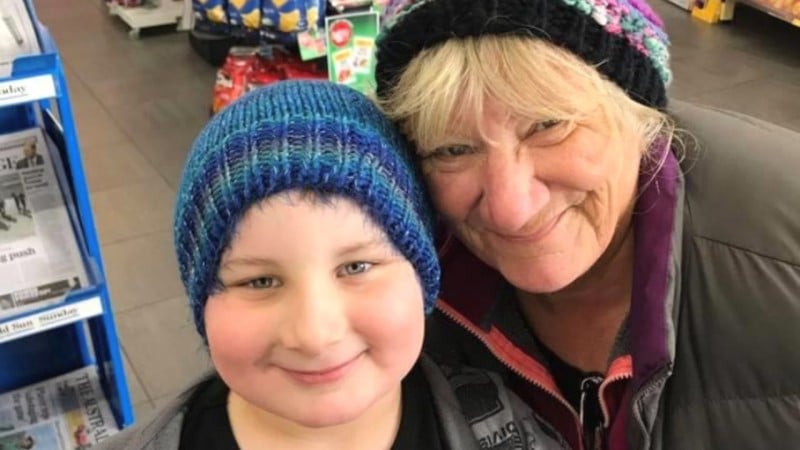
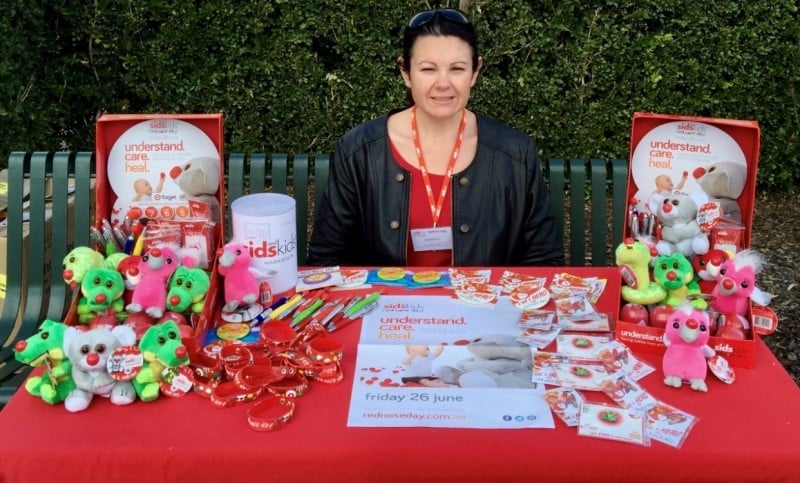
Each year, hundreds of volunteers give generously of their time to ensure Red Nose Day is a success. Behind every one of those volunteers is a story and very often a deep connection to the idea of supporting families and saving little lives. Felisha is one of Red Nose’s longest-serving Red Nose Day volunteers, clocking up almost two decades of involvement. She shares the story of how and why she brought the magic of Red Nose Day to her community in Denman NSW.

Even before I had kids, I knew about Red Nose Day. Whenever my husband Peter and I saw red noses for sale in a shopping centre we’d always stop and buy one. For some reason we always felt a connection to the cause, but we didn’t ever imagine it would impact us so personally.

I had a miscarriage with my first pregnancy. At the time I had very little support and it was really hard. I contacted SIDS & Kids, as Red Nose was known then, but I didn’t really become involved until later, after the birth of my second son, Jack.

When Jack was four months old I found him in his cot, face down and not breathing. I remember screaming to my husband for help. I had to try and resuscitate him.

Denman Hospital was a 2 minute drive away so we ran to the car, with our toddler, and took him straight there. A local gardener at the hospital saw us pull up and ran to us, grabbing Jack out of my arms and rushing him into the hospital. He must have been able to tell something very wrong when he saw our faces in the car. I didn’t know if Jack was going to be OK.

Jack did survive and after a week in John Hunter Hospital in Newcastle, where he was transferred, he was diagnosed central sleep apnea. His brain was not sending the signals to make him breathe properly, and so he wasn’t getting enough oxygen.

Jack came home but spent the next five years on oxygen therapy while he was sleeping. We had to use a sleep monitor. My grandfather, Percy, was the president of Denman Rotary at the time and Rotary were able to donate the monitor to us. Initially SIDS & Kids Newcastle provided us with the probes for the monitor and from then on, we were in touch with them all the time.

I eventually got pregnant again but unfortunately had a late term miscarriage. This time, I went to a local SIDS & Kids support group, which made a massive difference compared to how things had been with my earlier loss.

I was still heartbroken at the lack of support I received at the hospital, but through SIDS & Kids I was able to take things to the hospital about miscarriage grief to raise awareness because at that time there was nothing. And sometimes we’d drop off little care boxes for other parents who were going through it.

My grandmother, Noela, had lost a little boy in the cot years before. She ended up coming to the group as well and she finally got a chance to grieve for her son. It’s amazing how much this helped her even all those years later. It was like she had people who understood her grief. It meant a lot to her to be able to help some of the younger mums in the group, too.

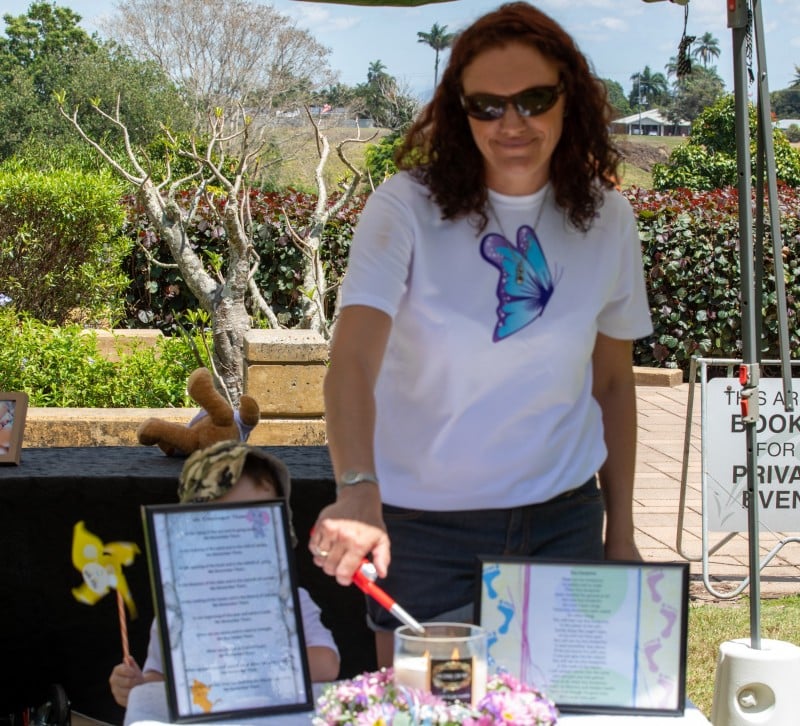
One of the things I’m most proud of that came out of my involvement in the group was the establishment of a memorial garden for families so they could have plaques to recognize their babies. I was really bothered by the fact that my babies didn’t have a grave and that there was nothing to even show they existed and I knew other families might feel this way too. We called it the Garden of Innocence.

Eventually the SIDS & Kids group couldn’t operate anymore in my local area, so I started putting more of an effort into Red Nose Day, especially when my eldest son started at the local school. All the years my boys were at primary school we’d celebrate Red Nose Day and have all the kids dress up in red. We’d have competitions and sell merchandise.

Denman NSW, where I live, is a small country town, and after I’d finished at the school for the day I’d go up to the main street and stay there until 5pm so the kids from the other local school could come and purchase merchandise. I’d walk around to the businesses as well who would all support me.

Although all three of my boys have finished primary school now, I still do my bit for Red Nose Day.

It’s been hard at times to continue as life has had its ups and downs, but I do it because I know what other families are going through in tough times.

Red Nose Day is just something that is part of me now and that will always be a part of me. Just knowing that I can do something for the community touches my soul. I want people to understand what others are going through. You never want or expect it to happen in your own family but if it does, we want people to know there is help and support out there.

Red Nose helped me stay focused when I needed them so I want to give something good and worthwhile back to the community, even if it only helps one person.

Red Nose Day relies on the generous involvement of many community members, volunteers and fundraisers. To find out more about how you can get involved visit www.rednoseday.org.au

Red Nose Welcomes Federal Governments Announcement For Two Extra Days Bereavement Leave For Miscarriage

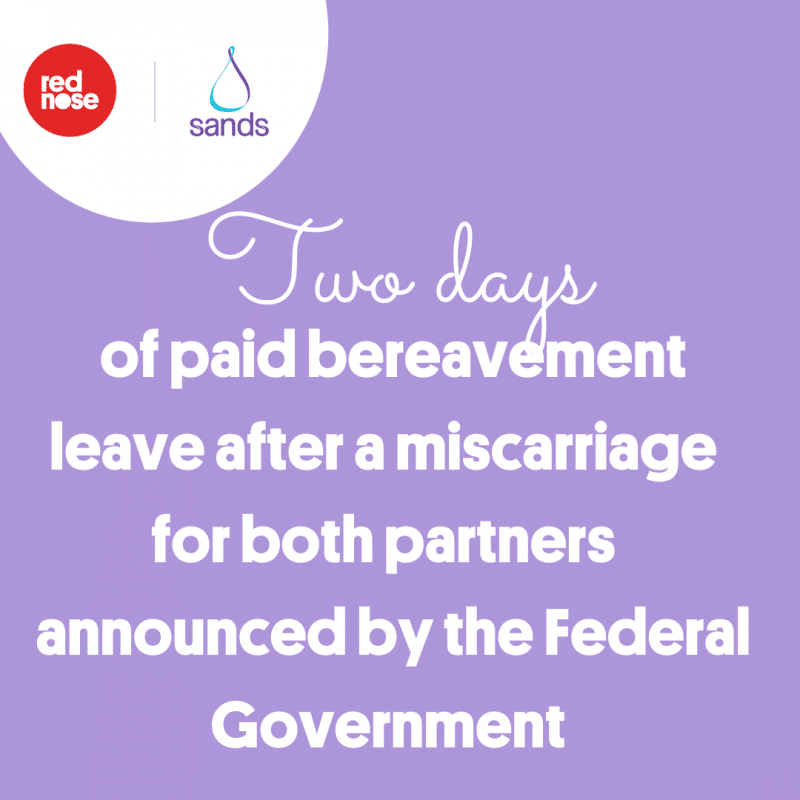
We welcome the announcement by the Federal Government of the intention to introduce legislation that includes two days bereavement leave for both partners in loss of a pregnancy before 20 weeks. This policy will apply to all workers being employed under the Fair Work Act.

Keren Ludski co-CEO said

“Two days may not seem like a lot, but the policy provides legitimacy to the trauma that miscarriage can cause families and also brings the conversation out in the open.

“ We are particularly pleased with the inclusion of partners in the policy, as often their grief is minimised even further than the person who experience the miscarriage.

This announcement comes on the back of the NSW Government announcing that all public service staff will now receive an extra five days leave entitlement if they suffer a miscarriage or stillbirth.

“It is wonderful to see what we have long known to be a traumatic event, on the national agenda and receiving the attention it deserves

“We welcome the conversation around miscarriage and baby loss and encourage more people to speak openly about their losses.

If you have experienced a miscarriage, stillbirth, neo natal death or childhood death Red Nose is available 24/7 on our support line 1300 307 308.

For media enquiries, or to arrange an interview, contact:

Fiona Jordan

Mobile: 0402 846 867

Email: marketingrequests@rednose.org.au

Red Nose Welcomes NSW Governments Announcement Of Five Days Paid Bereavement Leave

We welcome the announcement by the NSW State Government today that public sector staff who suffer a miscarriage or stillbirth will receive five days of paid bereavement leave on top of their standard leave entitlements. This is a step in the right direction.

Red Nose Australia co-CEO Keren Ludski said it was time more public and private sector employers got on board and supported their staff through miscarriage and stillbirth.

“When a family suffers a stillbirth or miscarriage, they are not just mourning the loss of a pregnancy.

“With the loss, they are mourning first smiles, birthdays, graduations and weddings. For some families, the loss can feel insurmountable.

There are also often costs associated with health care, funerals or support. Many of our families report that they had to go back to work before they were ready as they could not afford to take time off.

“Going straight back to work or using up other leave entitlements can cause extra heartache and financial strain.

As an organisation that helps to support families through miscarriage, stillbirth, neonatal death and child death, we know how important giving families the space to grieve can be for long term mental health outcomes.

“We look forward to having more employers offer this essential entitlement.

For media enquiries, or to arrange an interview, contact:

Fiona Jordan

Mobile: 0402 846 867

Email: marketingrequests@rednose.org.au

Even Experienced Parents Benefit From Our Safe Sleep Advice Line

Second-time-mum, Tea*, didn’t think she’d have concerns about her baby’s sleep after successfully raising one child through infancy. But she’s glad she called Red Nose’s Safe Sleep Advice Line for reassurance when her son met a significant developmental milestone.

*Caller’s name changed to protect her privacy

“I called the Safe Sleep Line when I started finding my six-month-old son asleep on his tummy in the cot. I was really concerned about the risk of SIDS, knowing how important back sleeping was to reducing the risk of that happening.”

“I knew Red Nose had a good reputation in this area because of all the research they’d done into SIDS prevention and developing guidelines about babies’ sleeping environments.”

“I left a message when I called, and the nurse called me back really quickly to answer my question. It was clear she had a lot of experience with infants and young children, which I found very reassuring.”

“She reassured me that tummy sleeping is a risk for very young babies, but that because my son was now six-months-old and developmentally able to roll himself onto his side and back again, that it was OK to let him find his own sleeping position after I’d put him down in the cot.”

“She gave me some really helpful advice on how to ensure his cot was safe from hazards that might affect him when he rolled into this position, so I just made sure the cot was clear and he was wearing a safe sleep suit.”

“I still put him to sleep on his back, but I don’t panic if he moves himself now.”

“I’m glad I called. I let the ladies in my mum’s group know about the Safe Sleep Line and none of them had known it was available, so I’m really happy to be able to tell others it’s there.”

“I’m a second-time-mum, but I still have questions and things I’m unsure about, so for peace of mind I think it’s always worth checking, no matter how experienced you are!”

For Safe Sleeping and Safer Pregnancy information call 1300 998 698 (business hours) or visit our online advice hub.

Introducing Heart Strings

INTRODUCING Heart Strings – a new way to belong and connect to our community.

We are thrilled to launch today our new community membership program, made with love especially for bereaved families.

We know how important connection and understanding is for bereaved parents, and so we have created a new way for families to be part of our caring community.

As a member, you’ll receive some special benefits and be part of shaping our services and programs for families.

Heart Strings is all about love and families supporting families, and is a simple and effective way for you to give back and make a difference for other bereaved families.

For more information or to join visit rednose.org.au/heartstrings

Meet Fran Volunteer NSAG Member

Our National Scientific Advisory Group (NSAG) is made up of leading Australian specialists and experts across the stillbirth, sudden and unexpected death in infancy, and bereavement space. Associate Professor Fran Boyle is one of its members and she shares with us what the role means to her in honour of National Volunteers Week.

The National Scientific Advisory Group is an education and research committee whose role is to recommend research initiatives, identify gaps in Red Nose’s education and grief and loss services and to ensure our education messages stem from robust, evidence-based research. As well as being a current member of the committee at Red Nose, I’ve held a number of roles with Sands over the years, including parent supporter, trainer and member of the Sands management committee.

I started volunteering with SANDS Queensland more than thirty years ago. At that time, SANDS had just started in Queensland, and we were a small group who got together in each other’s homes to produce a newsletter and provide phone support to other families. (Red Nose and SANDS merged in 2020.)

Like so many volunteers who are drawn to Red Nose, I wanted to do all I could to improve the care and support available to parents following the loss of a baby, and that same drive is why I continue doing what I do today.

Outside of my role on NSAG, I’m a health services researcher at The University of Queensland’s Institute for Social Science and Research, where I also co-lead the care after stillbirth program with the Centre for Research Excellence in Stillbirth.

My interest is in understanding people’s experiences of healthcare and how we can work to improve those experiences, especially for bereaved parents.

I’ve experienced so many meaningful and memorable moments as a volunteer for Red Nose. Seeing the organisation flourish is a source of ongoing fulfilment for me.

Stopping to reflect on the very large numbers of people who’ve been supported in so many different ways over the years highlights a wonderful achievement, but at the same time a very sad reality.

And personally, the lasting bonds and friendships I’ve forged in this community have been such a positive reminder of my own baby’s legacy.

I do believe that volunteers can make a difference. For example, parent voices and parents’ experiences have been the driving force for so many improvements in care after the loss of a baby.

There are also many different ways to volunteer. To anyone considering giving back to the Red Nose community, I’d say find a way to contribute that matches your interests and time availability, start small, and take it from there. Whilst your goal may be to help others, you’ll soon find that volunteering has so many positive benefits for you, too. That’s an added bonus!

Behind The Noses Kate’s Story

There are many dedicated staff, volunteers and supporters who together make the work of Red Nose possible. This is Kate’s story.

I’m one of a team of Bereavement Outreach Workers – spread across the country – who work in the Hospital to Home Program. We support families for the first 3 months after the death of a baby. The program is something so needed, and it is wonderful to see it begin to find its feet in the community.

The kind of support we provide is both practical and emotional. We meet with clients – either by phone, video or face to face. Sometimes I might attend an appointment with them or help them find a social worker. Other times I might be liaising with a funeral director, an employer or a school. The needs of each family are so varied and so the work is too.

The Hospital to Home team is a wonderful group of women to be part of. Everyone in the team has a shared focus and passion and I’ve found that this really brings us together, despite our geographical distance. Each of us brings different, but complementary skills to the role.

I bring my background in midwifery and grief counselling to the team. Midwifery is my calling, and I’ve also completed graduate studies in counselling and grief support. As a time of great transition, I think birth can often be accompanied by different kinds of grief, even when things go ‘well’.

Sadly, there are so many times it doesn’t go well. As a midwife, it’s my job to give women their options and then support their choices regardless of my opinion. That’s true of my role in the Hospital to Home team, too, when I see women and their families at their most vulnerable.

I’ve always been inspired by the strength and resilience of women and families – their vulnerability and their ability to find something inside, that they didn’t know they had, and keep going.

To make sure I can keep going, despite the sadness I feel for the families I support, I try to remember that whilst it is OK for me to feel deeply sad, this is not my grief and the best thing I can do is stay on the fringes so I can help them find ways to cope with it.

It helps that I feel so supported, loved, nurtured and valued by my team. It’s amazing to work for an organisation that truly cares about its employees and the families they support.

Meet Marilyn Treasured Babies Volunteer

We’re celebrating the amazing contributions of Red Nose volunteers who generously give their time to help support all areas of our organisation. This is Marilyn’s story.

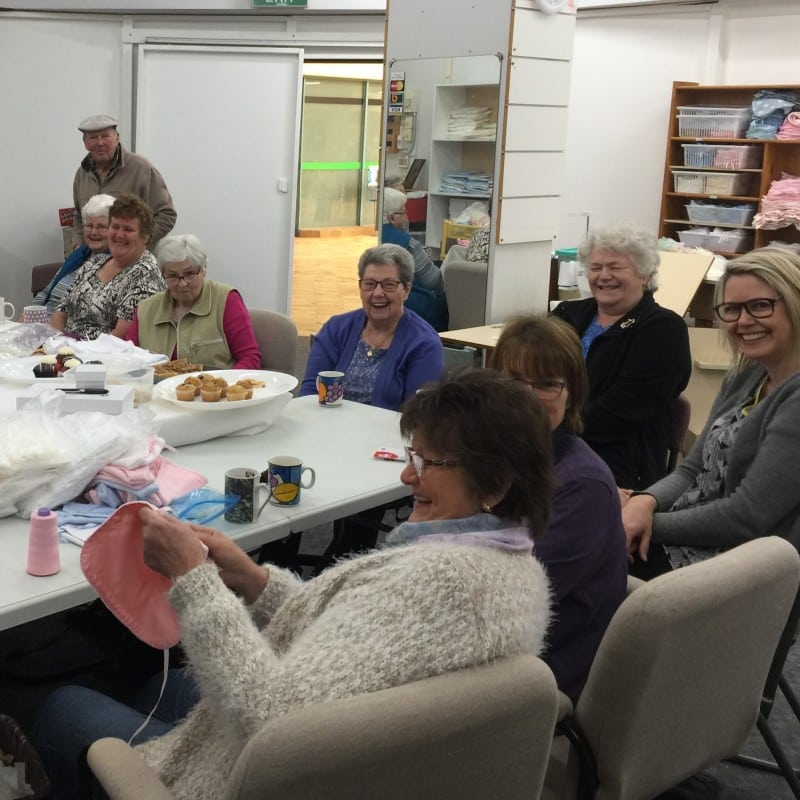
Marilyn has been helping make bunny rugs, sleeping bags, angel box linings, and tiny adorable clothes for our Treasured Babies program for four years.

Since she was a young girl, Marilyn has been a volunteer for various organisations for over 60 years. She has been a sewer since she was a young girl, and in her professional life, she spent 25 years doing alterations for people and even made wedding dresses

Her skill and care have had an immeasurable impact on bereaved families, and we are lucky that she stumbled across the Mooroolbark storefront.

Where she says ‘I went in, and they locked the door and I haven’t left since!’

The Treasured Babies program provides families with appropriate sized clothes that have been specially designed to adapt to meet different situations. Parents treasure their gift from Treasured Babies for years to come.

Like so many of our volunteers, Marilyn is not keen on being singled out. She wants to make sure that everyone knows there are so many different talented people, especially at the shop, who work so hard to help make items for families, ‘the work and effort they put in are beautiful,’ and just like Marilyn, they have helped so many families.

When asked why she volunteers, Marilyn says,

“Giving back to the community helps keep you sane.’

Marilyn gets a lot back from volunteering. She says ‘To make the lining for the angel boxes is so special. It helps give families some closure, and we make sure they can tell it’s made with love.”

She also jokes that this is ‘my life now. My husband has to put up with stuff being all over the house.’

Treasured Babies

Treasured Babies relies on the generous support of volunteers like Marilyn. The Treasured Babies items are provided free of charge to hospitals and funeral homes for bereaved families and babies.

Treasured Babies

Register to Volunteer

Meet Carmen Walk To Remember Volunteer

In the lead up to International Pregnancy and Infant Loss Awareness Day we have spoke to wonderful Mackay Walk to Remember volunteer co-ordinator Carmen. She talks about what she does to organise the event and why it’s so important to her.

Carmen is a single Mum of a five-year-old son, an almost one-year-old and the beautiful Ava Mae, who was stillborn.

She is also a children’s swim teacher and currently studying a Bachelor of Nutrition. It’s hard to imagine many people busier than Carmen. But pulling together the Walk to Remember in Mackay is important to Carmen.

‘It is so worthwhile to volunteer. It’s great to be part of the community, it helps me, and it helps others to remember their loved one.’

Carmen first became the champion of the Mackay Walk to Remember when the previous organiser moved from the region, and her first event was held in 2019.

Walks to Remember are a chance for people whose babies have died to gather and walk the steps their children never got to take. It gives families the opportunity to openly talk about their babies with people who have experienced a similar tragedy.

When asked what she does as the organiser of the Walk to Remember, Carmen responds, ‘ground hire, safety, setting up equipment, fundraising, arranging donations of food, pulling it all together and doing a reading on the day. Just everything, really!’

Despite being busy, Carmen thinks being part of the community gives her so much.

‘We’re together just due to circumstances, we probably wouldn’t have met otherwise, but the families are beautiful people. It’s lovely to come together, it means so much to people.’

Carmen has continued to dedicate her valuable time, volunteering again in 2021 and this year, delivering more beautiful Walk to Remember events for our bereaved families. Carmen, along with her local team, has also raised more than $2,000 for Red Nose in the lead-up and at the Walk to Remember event this year!

Without volunteers like Carmen, Sands and Red Nose wouldn’t be able to run Walks to Remember across the country. If you’ve been inspired by Carmen’s story and would love to give back, please click the link below. We look forward to welcoming you to the Red Nose volunteer team!

Register to Volunteer

Meet Edwina Peer Support Volunteer

Edwina, one of our wonderful peer support volunteers, joined Red Nose shortly after the birth of her third child, Elodie.

On the day Elodie was born, a midwife asked for a huge favour.

In the same hospital, a family had lost their baby at 37 weeks a few days before.

The midwife at the hospital knew that Edwina had lost her first son Sebby and instinctively understood that if anyone were willing to help this family, it would be Edwina.

After spending time with their still baby, the family had asked if they could hold another baby, a living one. Edwina and her family were more than happy to allow them some time with Elodie.

This moment created a beautiful friendship between the two families and made Edwina realise that she wanted to support other families through the worst days of their lives. It made her think, ‘how am I not doing this?’ And from here, she joined the Sands and Red Nose peer support team.

Sebastian, Sebby, The Seb was a beautiful boy who bought love and light and expressive eyebrows to anyone lucky enough to stumble into his orbit.

He appeared healthy and well until he started having seizures. Sadly, he had a rare genetic condition. So rare that only one other identified child in Australia has the same condition. Sebby was not expected to die, even after discovering his condition, but he did when he was ten months.

Edwina thinks that the death of a child changes you as a person. ‘You’re a different person; you’re a better listener.’

These differences give her, and other peer support workers like her a better insight and ability to connect with families who call our support line.

People often call when they don’t think they will get through this, but Edwina says

‘I know they will get through it.’

‘Friends and family often say the worst things, but someone who has been through a similar thing can empathise better. For the caller, knowing that someone else has been through it and is still functioning helps.’

Edwina says it is the tone change of a phone call that she loves the most about being a peer support worker. The caller will often be floundering, almost hyperventilating and sobbing when they first call, but by the end of the conversation, they know they just have to get through one day, a few more hours, then they can sleep.

Before I started ‘I asked my trainer, how do you know when the call is over? I was told ‘you’ll know,’ and it’s true. You just know.’

Before considering becoming a peer support worker, Edwina advises,

‘Don’t rush into it with your own grief. I couldn’t have done this in the first year. It would feel too close. But once you recognise your pain is love, then you can offer love to other people. And that is definitely worthwhile.’

Edwina has also shared her story with Mamamia which you can read here.

If you need help, you can call our 24/7 bereavement support line on 1300 308 307.

__________________________________________________________________________________________________________________

Edwina was also featured on The Glimmer Podcast by Dr Ashleigh Smith. This podcast is for fellow grieving families who have suffered pregnancy loss – miscarriage’s, stillbirth or neonatal death.

The mission of this podcast is to assist you to come through this cruel twist of fate, with as much psychological fortitude, compassion for yourself and connection with others as possible, using wisdom, knowledge and insights sourced from interviewing experts and specialists in the fields commonly accessed by grieving mothers.

Check out their episode here and more about the podcast here: Who can you talk to about baby-loss? This episode is all about managing tricky conversations with family and friends, and the free support available from the Red-Nose support line”

__________________________________________________________________________________________________________________

Red Nose Peer Support workers

Red Nose and Sands Peer Support workers like Edwina are specially trained to support bereaved families across losses – from early miscarriage to losing a baby or child.

Register to Volunteer

Behind The Noses Joan’s Story

There are many dedicated staff, volunteers, and supporters behind the work of Red Nose. This is Joan’s story.

I have a long-standing, deep relationship with Sands, and now Red Nose, as a bereaved parent, volunteer, and as one of the founders of the Victorian-based Older Loss Support Group.

The Older Loss Support Group is very special to me and to the many others who’ve felt lonely in their grief because their babies died at a time when people thought the best way to cope with the loss of a child was to actively forget about it – to go home and have another baby.

I lost two baby daughters in the 1970s – Rachel and Andrea – and I have so few memories to keep of either of them. When Rachel was born, she was struggling to breathe in a humidicrib, and I never got to see her at peace when she died at only 3 days old. Andrea was later stillborn, and I didn’t get to see her at all. It was so cruel. So unreal.

It wasn’t until twenty years later that I found Sands. I went along to a memorial service and loved the support and feeling among the community.

When I first went along to a local support meeting, the people there were newly bereaved and even though they were interested and supportive, they found it hard to relate to my story and vice versa.

So, when I was invited to attend a get-together to discuss a group for people who had lost their babies quite a while ago, I went along. From that moment I felt that I was amongst friends, which was the most validating feeling.

The Older Loss Group became a lifeline for parents like me, whose grief had never been truly acknowledged or reconciled. To finally be able to talk to someone else who knew what it was like to never have seen or held their baby was so meaningful.

As the group grew, we would visit cemeteries together. We advocated for better care for the often-neglected children’s areas and as a result were able to make improvements to beautify these special spaces. Along the way we also began to ask a lot of questions and try to find out more about the sites where hospitals once buried babies who had died.

Other families began contacting us to see if we could help find their baby’s resting place and, in many cases, we’ve been able to do that for them. It’s such an honour and privilege to be with a family so many years down the track when they are finally able to find a sense of peace and begin to feel whole again.

So much has changed over time. Now, parents are able to see and hold their baby, to share their grief with loved ones, and to decide what happens to their baby in the way of a funeral or burial. It’s fantastic that there is also so much more in the way of support for families.

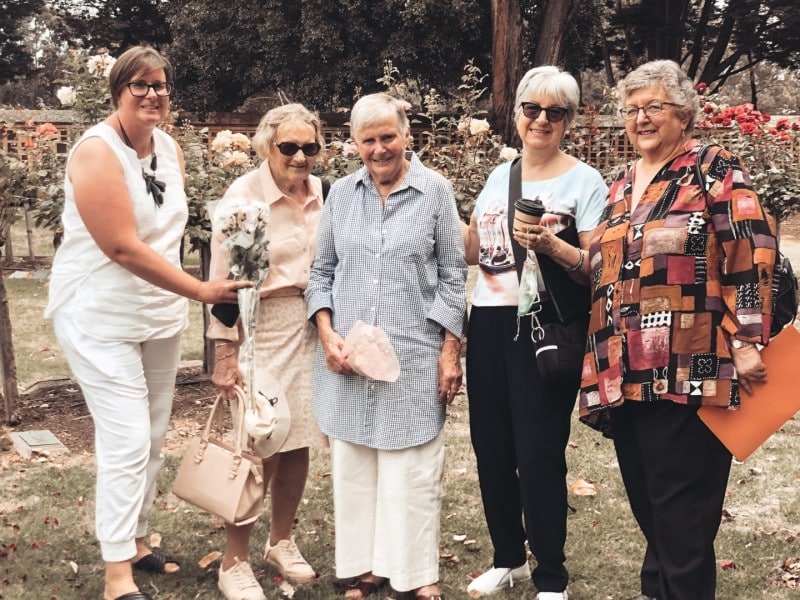
The power of being able to talk openly about your baby can’t be underestimated. As the years have gone by, the Older Loss Group have continued to get together for social outings and dinners, and we still really benefit from that ongoing support we give each other. Many of us have stayed part of the community in other ways, helping to give back to others by becoming a volunteer parent supporter, a committee member, or by organising special community activities such as Walks to Remember and memorial services.

I’ve even had the honour of speaking at conferences in Sydney and New Zealand about the life-long impact of not being able to see, hold or bury your baby as well as the role peer support can play in recovering from loss. Years ago, I would never have felt I could have done this, but I definitely feel that my girls and Sands gave me the courage to do so.

I think it’s so important bereaved families know it’s never too late. No matter how long ago your loss, there are people who understand, who can listen, and who can support you, if you can find the courage to take the first step.

Red Nose Launches National Stillbirth Awareness Campaign

Stillbirth is a hidden public health crisis. Across Australia, around 2,200 babies are stillborn every year – that’s six every day. Red Nose, including Sands, is proud to launch a national stillbirth awareness and education campaign on February 1.

The campaign, named ‘Still Six Lives’, will provide advice and information about stillbirth prevention, increase awareness, provide targeted strategies to reduce stillbirth in high risk groups and encourage public conversations about stillbirth as a public health issue.

A culture of silence and stigma also exists around stillbirth. The impacts of this are profound: mothers and their partners are unaware of the part they can play in reducing the risk of stillbirth; parents are ill-prepared to deal with the emotional, social and financial consequences of stillbirth; and friends and family can lack empathy and understanding for parents of stillborn babies.

In contrast to the 85% reduction in incidences of Sudden Infant Death Syndrome (SIDS) over the past 30 years, Australia’s rate of stillbirths has remained largely unchanged for the past two decades. Not every stillbirth is preventable – but many are.

To address these issues, a consortium comprising Red Nose, Sands, Stillbirth Foundation, the Stillbirth Centre of Research Excellence, Community Hubs Australia and the University of Newcastle has teamed up with creative agency Icon to deliver a national public awareness and education campaign, called ‘Still Six Lives’, which launched on Monday 1 February.

The campaign hopes to assist in reducing stillbirth rates by 20% in three years, by addressing three key modifiable factors:

  • Being aware of changes in fetal movements and seeking urgent medical help if movements change
  • Encouraging maternal safe side sleeping after 28 weeks’ gestation
  • Stopping smoking (and not being exposed to second-hand smoke) during pregnancy

For more information, please visit the campaign website: preventstillbirth.org.au

Parental Leave For Parents Of Stillborn Babies

Parents of stillborn babies are now guaranteed access to unpaid parental leave for up to twelve months, following changes to the Fair Work Act passed by the Australian parliament yesterday.

In addition, other amendments protect parents of stillborn children or children who die aged less than 24 months from being recalled to work from parental leave by their employer.

Red Nose CEO Keren Ludski welcomed the new laws.

“Parents who are impacted by stillbirth, and those who experience the death of an infant, need time to grieve and heal after their loss. Yet previously they could be denied parental leave or made to return to work. These changes will give families much-needed time and space.

The amendments were prompted by the recent report of the Senate Select Committee on Stillbirth Research and Education. Red Nose thanks the Australian government, Opposition and other MPs for their support of these changes, that will help remove the stigma surrounding stillbirth by treating parents of stillborn children in the same way as other parents.”

If you or someone you know has been impacted by stillbirth or the loss of a child, Red Nose is here for you. We provide free support 24 hours a day, 7 days a week. Call us on 1300 308 307 to talk, 24 hours a day.

You can also call 1300 308 307 to make an appointment for a counselling session or to join a support group, and we have resources available at www.rednosegriefandloss.com.au

Red Nose And Sands Join Forces

We are pleased to announce that Red Nose and peer support organisation Sands Australia will be merging operations, coming together under one roof. The merge is expected to take effect in late November, at which time Sands will be become part of Red Nose. This exciting next step in our journey means that together, we will be able to help even more families than ever before and ensure that all families receive the care and support they need.

The new organisation will continue to be called Red Nose, but the peer-to-peer support services will be delivered under the Sands brand.

Red Nose and Sands have for some time been exploring the idea of joining forces to create a single organisation that will deliver high quality bereavement care and work towards preventing all sudden and unexpected deaths during pregnancy, infancy and early childhood.

Both Sands and Red Nose were founded by bereaved parents who wanted to make sure families received support following the death of a baby.

We share a long history, similar values, and a shared vision for the future – to provide parents with the best possible bereavement support services, and research and education to prevent babies and children from dying suddenly and unexpectedly.

The Sands model of care is grounded in peer support, which will complement our professional counselling services. Coming together as a single organisation will also simplify the process of seeking support and ensure families receive the right help on their grief journey.

As a joint organisation, we will have an even greater capacity to provide high quality bereavement support services and to invest more of our community funding into programs to support Australian families.

Once the current administration activities are completed, we expect that our day to day operations will remain largely unchanged. Sands staff and volunteers will continue doing their important work. We will continue to run our local offices and support groups focused on the local community.

There will be a considered process to bring our existing services and teams together that will take place over the next twelve months. Our supporters will have the opportunity to be involved in this process.

We are excited about the next chapter for Red Nose and are sincerely grateful for your continued support of bereaved families across Australia.

For more information please contact us on 1300 998 698

Behind The Noses James’s Story

There are many dedicated staff, volunteers and supporters who together make the work of Red Nose possible. This is James’s story.

I first became involved in Red Nose Day in my Primary School days, proudly sporting a red nose on the playground – and today I manage Red Nose Day, helping people everywhere buy that iconic red nose. Previously, I had been working in a different industry but I knew I wanted to do something with a little more purpose.

Working on events and various community programs had been a passion of mine and my partner saw a role with Red Nose and suggested I apply.

I completed a 6-week internship during Red Nose Day in 2017 and loved the connection to supporters and families. I decided that I wanted to make a go of working in the charity sector.

Luckily, a Community Fundraising role opened up at Red Nose a few months later and I jumped at the opportunity!

I have been the Fundraising Campaigns Manager at Red Nose for the past 3 years, and I am passionate about coordinating our major fundraising and awareness campaigns throughout the year, including Red Nose Day!

One of the best things about my job is working with a range of different people from different backgrounds and in different departments, who all carry the same passion and dedication for helping people.

I draw a lot of inspiration from people who can listen and support others through tough times and not expect anything in return.

Through my role I help create campaigns that get seen by millions of people across the country, and develop ways for supporters and families to connect with our organisation, ensuring that there will always be support for families who rely on Red Nose services in their time of need.

Seeing the incredible difference our support services make, and the strength and resolve of the bereaved families connected to Red Nose – my reasons for working here are continually reaffirmed.

Our supporters and families, and the amazing work of our volunteers constantly inspire me.

From large corporate groups, to community events and individual fundraisers – the range of people willing to dig deep and contribute to support for families and vital research funding during Red Nose Day is so beautiful to witness.

It is such an honour to be able to provide an opportunity for our Red Nose community to have a means of giving back, and expressing their gratitude for what we do.

This year is the 35th annual Red Nose Day, and I am excited to connect with supporters across Australia again this August, and witness the incredible power of a community all working to support grieving families and find the next breakthrough in research that will stop babies dying suddenly and unexpectedly.

My partner and I have recently welcomed a baby girl into the world, so this years Red Nose Day takes on a different meaning, and motivates me even more to make sure Red Nose can continue to support the thousands of Australian families that rely on our services.

When I am not working at Red Nose you’ll either find me relaxing with my family, watching movies or eating too much Italian food.

Your donations help us provide 24/7 support to grieving families. Sponsor me this Red Nose Day or sign up and create your own fundraiser.

Mum’s Cherished Collection

My mum Sheila was always a collector and she loved to display her cherished memorabilia around the house. From a big cabinet of knickknacks to the parade of teddies up the staircase, one of her favourite collections was always her Red Nose Day Badges.

Mum passed away last year and as we’ve been sorting through her things, I found her prized collection of Red Nose Badges. She was always a proud supporter of the important work that Red Nose do.

For as long as I can remember, Mum loved to collect her Red Nose Day Badges. She always said that she was too vain to wear an actual red nose, so the badges were her way of supporting the cause.

She amassed quite a collection with 18 badges dating from the 1990’s right up until 2006.

She would buy the new badge design every year, carefully writing the date on the back on them and adding them to her china cabinet with her other precious things.

Red Nose Day was something we supported as a family every year.

I remember that it was one of the biggest fundraisers and we would buy the badges before the day ready to wear them. Some of us kids wore the foam red noses too.

Sometimes she even had the badges out in a different display, such as pinned to her teddy bear collection, or even on the curtains to show her support for Red Nose Day.

When the badges were discontinued, Mum continued to support Red Nose by buying the variety of items that were out each year, but she always loved her badge collection the most.

Mum always said her greatest joy came when she became a grandmother to my son Harry in 2011.

I was very unwell at the time of Harry’s birth and Mum was heavily involved in the care of her grandson.

It’s a time we now treasure for all of the memories she made with him and the close bond they shared.

When my son was born the fear of losing him in his sleep was always in the back of my mind and I can recall many a time checking on him to see if he was still breathing.

Red Nose Day is vitally important to raise awareness about SIDS and to fund education and research that will hopefully help to eliminate it from happening in the future.

This year, I plan to carry on Mum’s annual tradition of purchasing Red Nose Day merchandise and supporting such an important cause.

I will also involve my son Harry in this family tradition with the hope that he will continue it as he grows up too.

By Joanne Price

Red Nose Day is Friday, 14 August. This year, we are asking Australians to get silly for a serious cause to help save little lives and support grieving families.

Call our Grief and Loss 24/7 Support Line 1300 308 307

Call our Safe Sleep Line 1300 998 698

Keep up to date with our work

Name
Select the Newsletter you wish to Sign up to(Required)