Behind The Noses Megan’s Story

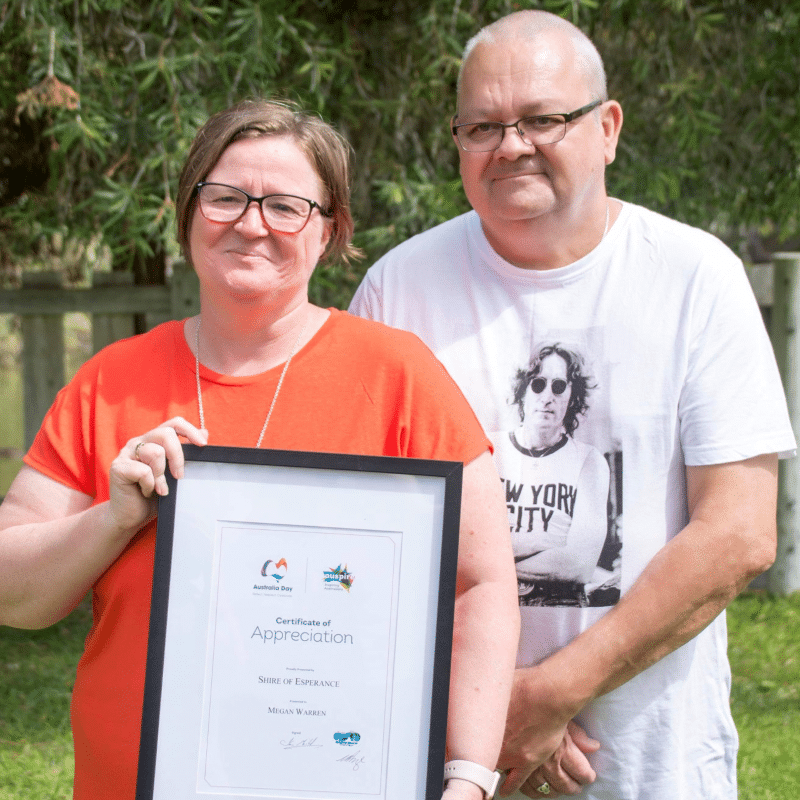
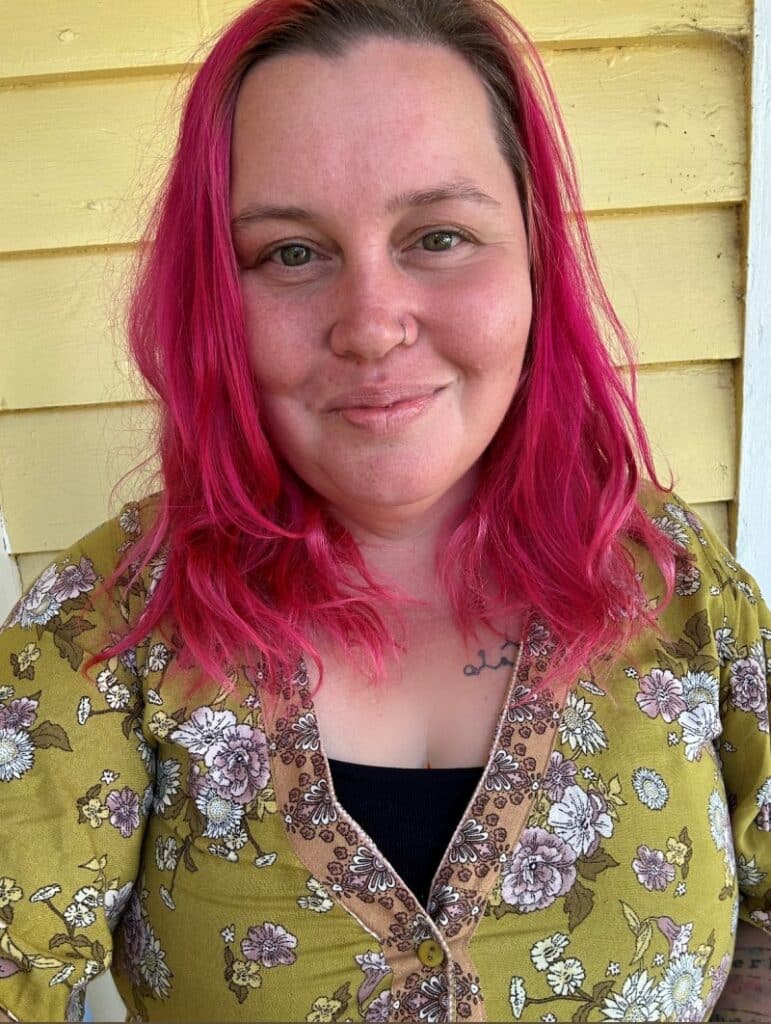
Meet Megan Warren, our Bereavement Support Worker with Hospital to Home

I started with Hospital to Home in September 2021; prior to that, I volunteered on the Peer support phone line and facilitated an online support group when they moved online due to Covid. I was also a member of the National Community Advisory Committee.

I’m now a Bereavement Support Worker with Hospital to Home, providing support to bereaved families in regional and remote areas of Australia through the Phoebe Joan Program.

I first contacted the peer support line when I was pregnant with our son Kavyn; after experiencing multiple miscarriages, a stillbirth and the death of our newborn son, I felt that I needed support with this pregnancy after so much loss. The beautiful mum that took my call had experienced a pregnancy after loss herself. She knew what I was going through and validated my feelings. That phone call made a huge impact on my life. I started attending peer support meetings and, in time, trained as a peer supporter, volunteering on the phone support line and helping out on Red Nose Day until we moved away from Perth in 2007. After stepping away from a management role in 2019, I felt that I had the capacity to give something back to my community, so I contacted Sands and started volunteering again.

When the opportunity came up to apply to be a Bereavement Support Worker supporting regional and remote families, I knew that I had to apply. When I experienced the deaths of our son’s I was living in Perth; despite having access to services and support, I still felt isolated. I felt that no one understood what was happening. I could only imagine what it would be like to experience a stillbirth or death of a child and live in a regional area that has limited access to services. Thanks to the technology we have available, I am able to provide practical and emotional support to families wherever they are in Australia or the world. I have recently supported a family who is travelling overseas to visit family after the death of their baby. I know that the work that we are doing makes a difference, and I could be the one person who says their baby’s name or asks them how they are really doing.

I really am passionate about reducing the silence and stigma surrounding pregnancy loss. My maternal grandmother experienced the stillbirth of her second child, and my mother experienced multiple miscarriages, but these were not openly talked about. In 2018, I wrote a submission to the Senate inquiry into Stillbirth Research and Education, sharing our family experience and the impact that stillbirth can have on a family.

It is a privilege to support newly bereaved families and have them share their stories and experience of their precious babies. When they are so new in their grief, it can be all-consuming, and they can’t see life ever being anything different. The support we provide might be practical, such as navigating Centrelink entitlements and returning to work or emotional, providing a non-judgmental ear to listen to what they are thinking and feeling and validating those feelings.

Outside of work, I’m a wife, mum and nana, and I love spending time with my family. I’m also currently a PhD candidate in Creative Writing at Deakin University, writing about my experience of pregnancy loss.

Megan was recently featured on the Her Herd Podcast.

ACCC Launches Your First Steps To Help Parents Keep Their Baby Safe

Parents and carers can get the latest, most reliable information on best practices to keep their baby safe and unsafe products, as part of a new ACCC initiative.

Your First Steps, launched today by the ACCC, is a dedicated website, where parents and carers can go for safety advice on how they can protect their baby when playing, moving, sleeping, soothing, bathing and changing.

“Young children, babies in particular, are among our most vulnerable members of the community and Your First Steps is a key part of our mission to help ensure their safety,” ACCC Deputy Chair Delia Rickard said.

“We know that preparing for the arrival of a new baby is an exciting time and that parents and carers can find choosing baby products confusing. Among all of the joy and chaos that a new baby brings, it can be difficult to choose safe products and understand how to use these products safely.”

Your First Steps covers new and emerging product categories such as soothing items, to help parents know what to look out for when selecting and using products in the first six months of a child’s life. It also provides important information about commonly used baby products that can be dangerous.

“We are increasingly concerned about a number of products marketed at soothing babies. Weary parents can understandably see these products as lifesavers in the haze of new-parent exhaustion, but they are potentially deadly,” Ms Rickard said.

Tragically, the data over the 20 years to 2021 reveals around two infant deaths each year associated with inclined sleep products, and in the same period the death of around one child each year has been associated with other infant sleep aids.

“Your First Steps points to the significant suffocation risks around sleeping babies on inclined products such as bouncers, rockers and swings. We don’t want to scare new parents, but by understanding the dangers of these products, parents can make more informed choices to help protect their baby,” Ms Rickard said.

Information about popular sleep aids such as soft toys and comforters is also included in the resource.

“Soft toys and comforters are marketed as being safe for sleep, but they can cover a sleeping baby’s nose and mouth and interfere with their breathing. Parents and carers should reconsider using these products and if they choose to use them, never leave baby unattended,” Ms Rickard said.

Cots, car seats, dummies, toys and bath aids are among the key categories covered by Your First Steps.

“Many everyday products can harm a baby through entrapment, falls, choking, suffocation and strangulation. This can be caused by unsafe product design or inappropriate use. It can also happen when parents or carers unwittingly use the products in an unsafe way. If you come across an unsafe product, tell the supplier and report it to the ACCC” Ms Rickard said.


“Boring is best when it comes to soothing and sleeping babies. Only ever place infants to sleep on a flat, firm surface and avoid decorations or any soft objects in or around the cot.”


“Your First Steps is an essential and trustworthy resource for parents and carers as they take their first steps on their journey to raising a safe and happy baby,” Ms Rickard said.

Visit babyproductsafety.gov.au for the full guide on keeping your baby safe.

If this information has caused distress, please call the 24/7 Red Nose Grief and Loss Support Line on 1300 308 307 or visit rednosegriefandloss.org.au

Program Spotlight Memory Collation Program

When a parent loses a child, they are not only left heartbroken, they are left with empty arms and a lifetime of grief. And while in unimaginable shock and heartache, they must also collect and savor as many memories of their child as they can – the only memories they will ever get to create with their child.

The Memory Collation program is a free service delivered by Red Nose in partnership with local hospitals that provides precious, tangible memories for families to cherish as they walk the tragic path of grief.

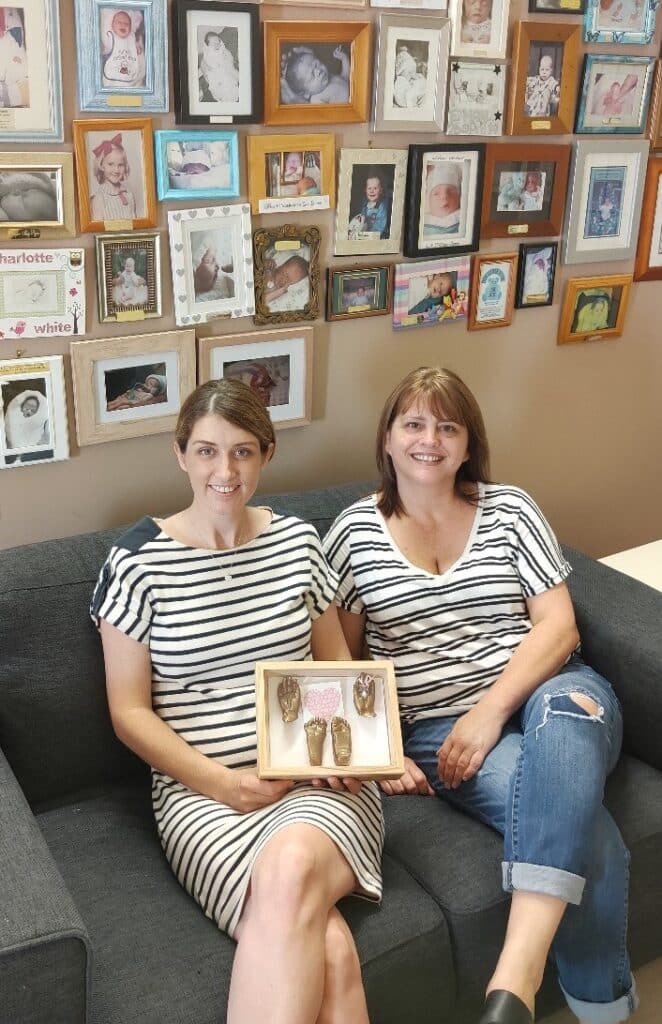
After a child has passed away, these priceless memories are lovingly collected by a specially trained Red Nose Volunteer who will visit with them in the birthing suite, maternity ward or the morgue to take molds and ink prints of the baby’s hands and feet, as well as locks of their hair.

Our team then preserves them in a beautiful Memory Box that is presented to the grieving parents as one of the only keepsakes they have left.

Program Coordinator Shellie says “Most parents I speak to say that the Memory Box with the castings of their child’s hands and feet take pride of place in their home. Having the castings on display in their home gives family and friends silent permission to speak about their baby and remember their life.”

“Because we love to talk about our child, just like any other parent.”

What’s in a Memory Box?

Castings – Families can touch them, feel them and hold them. They can examine the tiny details of fingernails and wrinkles. Some families hold their casting so tightly that they need to bring them back for repair.

Ink Prints – These intricate prints are displayed in a delicate scroll for older children, or in a small acid-free card for little ones, labelled with their name.

Lock of Hair – A precious lock of hair is preserved in a decorative small box. Some families will enclose this precious piece of their child in a locket they can keep with them always.

The Memory Collation Program is an important part of Red Nose’s network of Grief and Loss Services. Because in the midst of shock and grief, the last thing a family should have to think about is what precious few mementos they will preserve to keep their baby’s memory close for the rest of their lives.

Bereaved mother, Skye believes that the Memory Collation Program was vital in her healing – not only providing her and husband Trent with their daughter’s treasured molds, but because it’s also what first got her though the door at Red Nose.

Skye said “I’m not sure that I would have initially reached out for ongoing support if it hadn’t been for the experience of getting the castings done. A month after Nina passed away, I received a call from Red Nose that my molds were ready to be collected.

What I thought would be a quick drop in, turned into over an hour of talking to the Red Nose staff and realising just how overwhelmed with grief I was.

I then took the offer of ongoing counselling support with counsellor Moira that I am so grateful for. Moira provided me with much needed support in order to help me navigate my way through my grief and eventually return to work.”

Every family’s journey of grief is different and complex. As well as our unique Memory Collation Program, our network of grief and loss services includes additional supports such as parent and family support, sibling support, peer and group support, annual memorial services and our 24-hour Bereavement Support Line.

Red Nose provides all these vital support services for free, because cost shouldn’t be a barrier to healing a broken heart.

When you lose a child, moving forward feels impossible. And for those families, Red Nose is there to help guide parents along the lonely journey of grief.

Weighted Baby Sleep Sack Warning From Red Nose In Lead Up To Red Nose Day On Friday 12 August

With less than a month to go until Red Nose Day on Friday 12 August, Red Nose is aware of a number of online retailers now selling weighted baby sleeping bags to well-meaning new parents this winter.

Weighted sleeping sacks, like weighted blankets, are incredibly unsafe for babies. These products can compress a baby’s chest, leading to a possible lack of oxygen. Weighted sleeping sacks can also cause overheating – a well-known risk factor for SIDS.

Red Nose is alarmed to see these new products now on sale in Australia and being regularly marketed to new parents – particularly via social media.

Weighted blankets are also being referred to online as ‘sensory blankets’ or ‘calming blankets’ and retailers may claim these may help babies settle to sleep. Red Nose is warning new parents to please never use these products on babies.

Red Nose CEO Keren Ludski says Australian parents need to know that babies overseas have died from the use of weighted blankets.

The Red Nose Safe Sleep Advice Line has received a number of calls recently from parents of newborns asking for safety advice about weighted baby blankets and weighted baby sleeping bags.

In response, Red Nose has now released specific online advice for parents about weighted blankets: https://rednose.org.au/article/weighted-blankets

There is very little research on the safety aspects of weighted blankets or sleeping bags for babies, particularly in the context of sleep safety in babies and children.

Parents can also call the Red Nose Safe Sleep Line with any questions on 1300 998 698.

Red Nose’s safe sleep advice, like this weighted blankets advice is only made possible through the generosity of Australians on Red Nose Day.

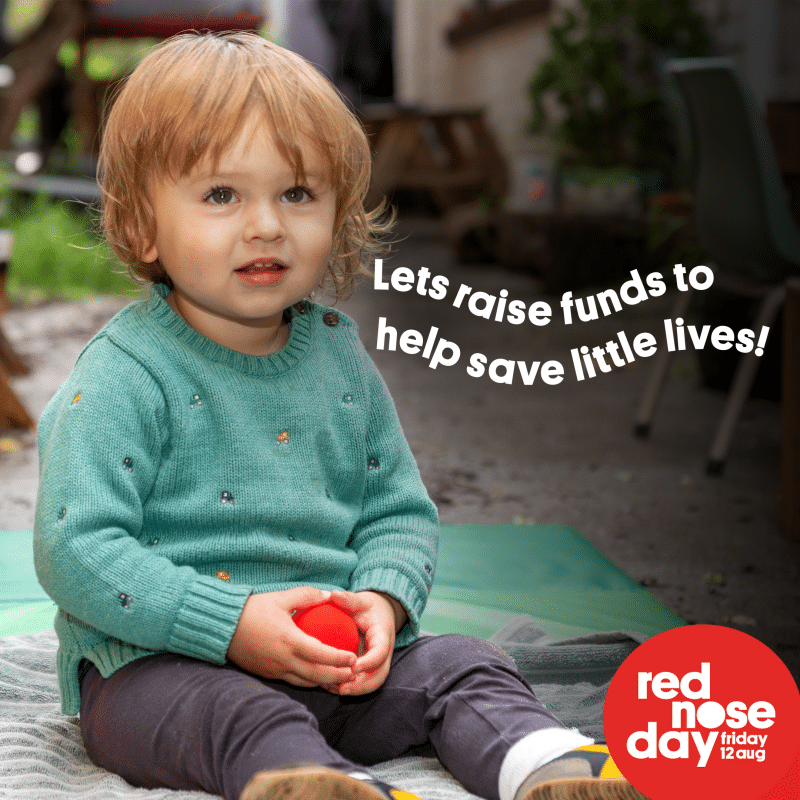
Red Nose Day is Friday 12 August, and aims to raise $800,000. Every dollar raised helps to save little lives by funding research and the development of practical advice like this new weighted blankets resource.

Funds also go towards Red Nose’s 24/7 counselling and support services for grief-stricken families who lose a baby.

Australians are encouraged to get silly for a serious cause by getting involved or donating to Red Nose Day: rednoseday.org.au

Red Nose Safe Sleep Advice Line: 1300 998 698

  • Dress baby for sleep using layers as you would dress or use layers yourself: to be comfortable, neither too hot nor too cold
  • Add/remove tucked in lightweight blankets to ensure baby’s tummy or back feels comfortably warm to the touch
  • Feel baby’s tummy or back – it should feel warM – don’t worry about cold feet or hands
  • Always ensure baby’s head is uncovered – no hats, bonnets, beanies or hooded clothing
  • Never use weighted blankets, weighted sleeping bags, electric blankets, wheat bags or hot water bottles for babies.

“It is incredibly alarming to see weighted sleeping bags and weighted blankets being marketed directly to parents of infants, who are told these products may help their baby sleep better. There is no research to support these claims.”

“The reality is that these products can actually be unsafe for babies, and Red Nose is urging every parent to please never use a weighted sleeping product on their baby.”

”We also want to ensure families with children, who have weighted blankets for adult use, are mindful of where they are kept and ensure they cannot inadvertently fall on a child or infant, leading to catastrophic results.”

“As a mum to a three-month-old baby I certainly have come across these weighted baby products online and in my social media feeds.

“There is so much conflicting information coming at new parents online, so it’s great to see an expert baby safe sleep organisation like Red Nose releasing this really practical advice about weighted blankets that clearly tells parents that these are not ok.”

Media contact: Claire Bonieux – 0451 020 503 – claire@upstride.com.au

Red Noses World Leading Hospital To Home Support Program To Continue

Red Nose Australia is delighted to announce the four-year continuation of our pioneering Hospital to Home stillbirth support program, after receiving $4.2 million in funding from the Federal Government.

It was announced by The Hon Ged Kearney MP, Assistant Minister for Health and Aged Care at the Royal Women’s Hospital last week.

The outreach program, the first of its kind in the world, provides vital support to parents in the immediate aftermath of the death of a baby or infant through stillbirth, neonatal death or the sudden unexpected death of an infant.

Through the Hospital to Home program, grief-stricken parents can receive individualised bereavement support from Red Nose Bereavement support workers – all of whom have lived experience. Support can be provided in a range of personalised ways – such as supporting siblings, assisting families with memory making or liaising with workplaces about how to sensitively manage a return to work. Support is tailored for each family and can be provided face-to-face, by phone or by video conference.

Since its launch in 2020, the Hospital to Home program has received 560 referrals from around Australia.

Hospitals can refer families or families can also refer themselves. Support can be provided face to face in some areas, or remotely.

Quotes from Red Nose Chief Executive Officer, Keren Ludski.

“The Hospital to Home program will continue to aid families at a critical stage in their lives -when they need both emotional and practical support.

“Every day in Australia, six babies are stillborn and three others are lost to accidents, SIDS or SUDI. Losing a child is incredibly devasting and without early support, parents are at risk of experiencing isolation and long-term mental health problems. Our world-first Hospital to Home program ensures that families are able to receive the assistance they need as soon as they experience the loss of a much-loved child.

“Our national network of bereavement support workers all have lived experience and understand the emotional needs of parents and families, and can also provide practical assistance from organising funerals to following up medical appointments.”

“We welcome the funding from the Federal Government and look forward to providing specialised care and support to parents and families in a time of need.”

Quotes from Natasha Walkerden of New South Wales – a Hospital to Home participant.

“The Hospital to Home program supported me when I returned to work as a teacher. Red Nose advocated for me when I was lost for words, but also validated my requests and guided my transition back into the workplace.

“Red Nose has always welcomed me to share memories of my daughter, Leila, and created a space where I could honour her and express my thoughts and feelings openly.

“The Red Nose team have given me so much strength to tell my son all about his big sister and tell anyone that will listen about my treasured daughter Leila and her sassy attitude and courageous nature.”

For more information on Red Nose’s Hospital to Home program.

Red Nose Day Friday 12 August

Hospital to Home is just one of the many services Red Nose provides and Red Nose needs funding to continue to save little lives and support grieving families. Join us this Red Nose Day to raise money and get Silly for a Serious Cause. www.rednoseday.org.au

For case studies or interviews call Fiona Jordan – National Communication and Marketing Manager 0402 846 867

For 24/7 support, families can reach out to our Grief and Loss support line on 1300 308 307.

Finding Hope After Loss

Your support gives heartbroken parents a safe space to grieve and heal. By Fiona Stark, Bereavement Counsellor

After the heart-breaking loss of a pregnancy, many parents struggle with how to grieve – this can be especially true for those who experience an early loss or Termination for Medical Reasons.

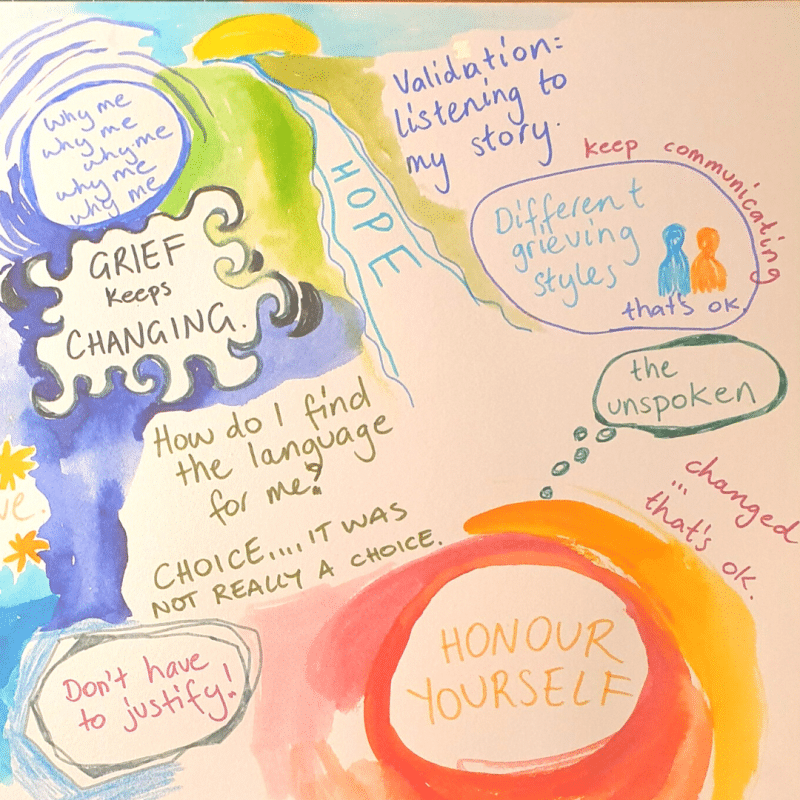
Often considered the Unspoken Losses, experiences such as miscarriage, molar and ectopic pregnancies, and other medically advised terminations are often shrouded in a unique taboo.

Thanks to your support, our latest Ways to Be Ok Forum focused on supporting parents who suffered Unspoken Losses.

The silence and lack of understanding in our community can make these types of losses particularly hard to share, making it difficult for grieving parents to seek support when they need it most.

Our recent online Ways to Be Ok Forum created a safe space for families to discuss their grief and learn new strategies to help their healing journey.

“A big part of healing is having our grief and love witnessed – validation that our baby’s life mattered.”

Reflecting on their own pregnancy losses, our brave panel of mothers helped normalise and validate the grief of an Unspoken Loss and gave hope to recently bereaved parents.

There is an incredible void after the loss of a pregnancy or baby, and support groups like this one are often the perfect antidote to the isolation.

Every month at our support groups we witness the healing power of hearing ‘me too’ or ‘I felt the same’.

Our groups create a safe space to grieve and ensure that the existence of a beloved pregnancy or baby never goes unspoken.

Your generosity helps ensure no parent has to walk the lonely path of grief alone. Through our forums, online resources, counselling and peer support, every parent has the tools they need to heal after the heart-breaking loss of their baby.

For 24/7 Grief Support call 1300 308 307 or visit our online Support Library here.

Help ensure that every grieving parent has the support they need, donate here today.

*Special thanks to Sara Grant and Fiona Stark, co-facilitators of our Termination For Medical Reasons Support Group for delivering this special Ways to Be OK Forum.

**Artwork courtesy of Art Therapy Student, Sally Le Guen.


SIDS Is Top Worry For New Parents Above Stillbirth And Sleep Deprivation

A recent survey of almost 400 new Aussie parents and parents-to-be has found that Sudden Infant Death Syndrome is their number one fear.

With just a month to go until Red Nose Day – Friday 12 August -Red Nose Australia has released new data showing parents of newborns and those expecting extremely concerned about SIDS.

Red Nose surveyed almost 400 new parents and parents-to-be across Australia throughout June and July, asking them their top worries about becoming a new parent.

Released today to launch the 2022 Red Nose Day fundraising appeal, results showed:

  • 90% of respondents said they were worried about SIDS
  • 70% said they were worried about stillbirth
  • 70% said they were worried about general baby safety.

The number of respondents worried about SIDS was far greater than the number of those who said they were worried about their own sleep – just 55%. However, new parents and those expecting were acting on their fears, with 80% of those surveyed saying they had reached out for advice or support about their worries. Most were looking online, with 70% saying they had turned to the internet for information – which was more popular than going to friends or family (60%).

About 2,200 babies are stillborn in Australia each year–that’s 1 in 135 pregnancies ending in stillbirth(where a baby dies after 20 weeks of pregnancy, earlier deaths are miscarriages). The most recent SIDS data is for 2019 – which showed 112 babies died of SIDS and fatal sleeping accidents that year. Together, 9 little lives are lost in Australia every day to stillbirth, SIDS and fatal sleeping accidents.

Red Nose Day is Friday, 12 August, and aims to raise $800,000. Every dollar raised helps to save little lives by funding research and practical support services like the Red Nose Safe Sleep Advice Line, which new parents can call if they are concerned about baby sleep safety. Funds also go towards Red Nose’s 24/7counselling and support services for grief-stricken families who lose a baby. Red Nose also has a suite of evidence-based stillbirth prevention information online for mums-to-be.

Australians are encouraged to get silly for a serious cause by getting involved or donating to Red Nose Day: rednoseday.org.au

Red Nose Safe Sleep Advice Line: 1300 998 698

  • Get involved: Make a donation, host an event or buy a red nose: rednoseday.org.au
  • Media kit (new statistics, facts, hi-res images, video, social media tiles): rednoseday.org.au
  • Main hashtag #rednoseday
  • Tag us on Facebook: @RedNoseAus
  • Tag us on Instagram: @rednoseaustralia

For interviews and case studies, media contact: Claire Bonieux I 0451 020 503 I claire@upstride.com.au

Influenza In Pregnancy

Influenza is a serious disease for pregnant women, the fetus and newborn babies. Pregnant women are more than twice as likely to be admitted to hospital with influenza than the general population.

A number of changes occur to a women’s body during pregnancy. These changes include reduced lung function, increased cardiac output, increased oxygen consumption, and changes to the immune system. Due to these changes, pregnant women have an increased risk of severe complications from influenza. The best way to protect pregnant women against flu is by vaccinating against it.

Many pregnant women are still concerned about the safety of the flu vaccine, with only half of pregnant women in Australia and New Zealand receiving the vaccination. However, the influenza vaccine is safe for pregnant women during any stage of pregnancy and whilst breastfeeding. No study to date has shown an adverse consequence of the influenza vaccine in pregnant women or their offspring. Vaccinations need to be given each year because the viruses are always changing. Vaccinating against influenza during pregnancy can not only protect women but provide ongoing protection to a newborn baby for the first six months after birth, when they are most vulnerable, yet still too young to be vaccinated themselves.

It is important to note that a flu vaccine will not protect you against COVID-19. Similarly, a COVID-19 vaccine will not protect you from being infected with the flu.

The Australian Technical Advisory Group on Immunisation (ATAGI) and the Commonwealth Department of Health have advised that a flu vaccine can be given at any time before or after, or at the same time as a COVID-19 vaccine.

Free influenza vaccine is available to all pregnant women in Australia and New Zealand. To receive the free influenza vaccination, pregnant women are advised to check with their specialist, GP, nurse, midwife or immunisation provider. Flu season’ typically affects Australia from June–September, peaking in August, May onwards is considered the best injection time for patients to receive maximum coverage from their vaccines. Most people will have developed immunity within two to three weeks of vaccination.

To read more about Professor Craig Pennell, chair of the Red Nose Scientific Advisory Committee, please click here.

Written by Professor Craig Pennell
Chair in Obstetrics and Gynaecology and Professor of Maternal Fetal Medicine
Head of Discipline
School of Medicine and Public Health
Faculty of Medicine and Health
The University of Newcastle (UON)

Red Nose Partnership With Bonds Wondersleep Range

We are thrilled to be continuing our relationship with Bonds and are excited about the new Red Nose approved Wondersleep Range!

We all know parents want to keep their little ones safe. And being a first time parent can be an especially anxious time.

Now you and they can sleep easy with these game-changing sleep bags and sleepsuits that have been perfectly designed for cooler nights to keep your baby cosy and comfy. And if you’re not a new parent, they also make great gifts for new parents or parents to be.

We know that overheating is a significant risk factor to SIDS and we are thrilled that BONDS is working with us to help us show parents how to dress for safer sleep. ”

– Jane Wiggill Chief Midwife

Did you know babies sweat less than adults?

  • That’s because they aren’t able to regulate their temperature as easily. So you need to help keep your bub at a temperature that isn’t too hot and isn’t too cold.
  • But with the Wondersleep range, you can sleep easy with these game-changing sleep bags and sleepsuits.
  • They’re cute, fun and fitting! What more could you want to keep your baby cosy and comfy on cooler nights?

Why do we approve these products?

  • Full-size range with fitted neck and armholes for a snug and safer fit
  • Two-way zip with protective cover
  • Breathable cotton filling and fabrics tested for quality and comfort
  • The sleepsuit is designed for babies on the move to offer a safer alternative when standing or cot climbing.

See for yourself!

Visit our Safe Sleep Advice Hub for all the latest evidence-based advice to help keep your baby safe.

Myth Bust Vaccinations Do Not Cause Sids

Unfortunately, there are still misconceptions out there about childhood vaccinations. At Red Nose, we deal with facts. And when it comes to immunisation, this is a big one: there is no evidence that vaccinating your baby causes SIDS.

In fact, Red Nose National Health Manager Dr Bec explains, several case control studies show the opposite, with sudden and unexpected death in infancy less common in immunised control groups, compared to those babies who are not immunised.

The immune system in babies and young children is still developing, leaving them more vulnerable to serious infections Dr Bec explains.

This is why it is important to be up-to-date with immunisations in the first year and beyond of life.

“In particular, we need to be vigilant at protecting our babies within the first six months of life,” Dr Bec says.

“This is the critical developmental period when babies are at the highest risk of dying suddenly and unexpectedly.

“It’s also the period when most vaccinations occur, which is why sometimes people mistakenly believe that vaccines might contribute to SUDI”

Newborns are protected in part from most infectious diseases by antibodies that are transferred from mum to bub during pregnancy and through breastmilk. However, Dr Bec explains, these protective antibodies do wear off, putting baby at risk of serious infection.

“Infections and illnesses are known as exogenous stressors, which are a risk factor for SIDS,” Dr Bec says. By preventing infections, we reduce the stress on the baby’s body, which in turn reduces th risk of sudden and unexpected death.

“Immunisation is a safe and effective way of protecting against illness, which is why Red Nose recommends immunising your baby on time.”

* Sudden Unexplained Death in Infants (SUDI) / Sudden Infant Death Syndrome (SIDS)

Have a question about Safe Sleep? Ask our Safe Sleep Experts a question today or call our Safe Sleep Advice Line on 1300 996 698 (during business hours).

New Video Explains Why Stillbirth Is Not The Mothers Fault

Researchers and artists from the Hunter Medical Research Institute (HMRI) and the University of Newcastle have collaborated to create a tool to help women who have experienced stillbirth.

Based on research conducted by Distinguished Laureate Professor, Roger Smith AM and his team from the Mothers and Babies Research Centre at HMRI, the video seeks to address the feelings of guilt often experienced by mothers after stillbirth.

“With more than 2,100 pregnancies ending in stillbirth each year in Australia, the video is critical in helping mums understand that stillbirth is not their fault,” Professor Smith said.

The tool arrived following the discovery the team made in 2019, identifying that unexplained stillbirth is often the result of ‘aging of the placenta’. This aging process is complex and not affected by the behaviour of the mother.

“What many people don’t realise,” Professor Smith explains, “is that the placenta is an organ of the baby, not the mother. As such, the mother has very little, to no control over that organ. She can’t prevent the aging from happening.”

The video, ‘We are all born of the stars,’ and the accompanying article has been published in the prestigious American Journal of Obstetrics and Gynecology. It is a collaborative work between the Mothers and Babies Research Centre, University of Newcastle artist Lee Dedman and composer David Banney.

While scientists generally work with journals to communicate research with doctors and other researchers, this video has been primarily created to communicate directly with the patients themselves. Delivering the outcomes of the research via music and rich imagery to attempt to cut through the complexity and reach grieving parents who may be suffering from guilt and associated depression.

Red Nose Australia is a leading authority on safer pregnancy advice and bereavement support for those people affected by the death of a baby or child. Red Nose CEO Keren Ludksi says this video is a valuable resource to help grieving mothers.

“Anger, shame, and guilt are emotions experienced by many parents who have experienced a stillbirth. Whilst these feelings are perfectly normal, they are challenging for parents to navigate,” Ms Ludski said.

“Having a resource that helps explain the function of the placenta and how its failure can cause a stillbirth will potentially help reduce that natural feeling of guilt.

Data from the US indicates that 83% of mothers who have experienced perinatal loss including stillbirth experience guilt, linked to depression. Experiencing a stillbirth also increases the risk of relationship breakdown by 40%.

The scientists at HMRI are continuing to develop blood tests to identify the presence of an aging placenta that will allow delivery of the baby before the baby dies.

The team are also working on drugs to help slow the aging of the placenta and hopefully prevent the stillbirth.

The journal will promote the tool and make it available worldwide to obstetricians, midwives, and counselling services, like Red Nose, to help grieving families.

Remember you can always reach us 24/7 on our Support Line 1300 308 307.

Holly And Josh’s Story

At about 36 weeks’ pregnancy, Josh and Holly gave birth to their firstborn son. To them, he was perfect in every way, but for lack of breath.

“I’d heard stories of people going through stillbirth, but you don’t ever really believe it could happen to you,” says Josh.

Around 2,200 families experience the tragedy of stillbirth each year in Australia. While not all stillbirths are preventable, there are ways to reduce the risk.

After facing this devastating loss, the Brisbane couple have been committed to raising public awareness about stillbirth. By sharing their story and making The Stillbirth Promise, they hope to inspire the public to join a movement that has the potential to save an unborn life. They also hope that encouraging the conversation about stillbirth will help others who have experienced it, to feel heard, and less alone.

“We’re encouraging Australians to make The Stillbirth Promise in the hope of sparing other families from the devastating loss of losing a baby”, says Holly. “Understanding more about stillbirth could save a baby’s life.”

Holly and Josh are calling on Australians to make a commitment to spreading critical awareness of the three key actions to reduce the risk of stillbirth with their networks and communities, and encouraging others to do the same.

“Our pregnancy was, for the most part, such a special and happy time. Bluey was the nickname given to him when we were about seven weeks pregnant (the size of a blueberry at the time).

“The nickname stuck throughout the pregnancy, and our family had all come to know and love him as Bluey. When he was born, we couldn’t bear to give him a new name,” shares Holly.

On a Monday morning in January 2018, Holly sat up in bed searching for movements, but there were none. Concerned something might be wrong, Holly contacted the pregnancy assessment unit at her hospital and was advised to go into hospital, where it was ultimately confirmed that Bluey’s heart had stopped beating.

“We were in disbelief. I just hoped that it was all a mistake, that they’d got it wrong somehow and our baby boy was going to be fine. But when he was born, the deafening silence in the delivery room, where there should have been newborn baby cries, confirmed our worst fears,” says Holly.

The couple reflect on feeling the same joy a parent would experience following the birth of a healthy child, after Holly delivered Bluey.

“Despite being far from the way we had expected, we still felt sheer pride and so much love when we met Bluey for the first time.

“The short time I spent with Bluey made me realise that happiness and sadness can coexist,” says Holly. “Life after Bluey can be described as bittersweet. He taught us the true meaning of unconditional love, but we will never really know him.”

Stillbirth does not discriminate. It’s a universal issue; it can happen to anyone.

“I feel a sense of injustice that Bluey doesn’t get to live his life and that he doesn’t get to know the love we have for him, but we keep his memory alive in many ways.

“We believe our second child, Olive, is a gift from Bluey. We tell her all about her big brother and say goodnight to him before bed every night,” Holly continues.

“The Stillbirth Promise is for Bluey, for Olive, for our loved ones who would like to have children, and for all Australians who may not know that stillbirth can touch their life,” adds Josh.

By making The Stillbirth Promise, Holly and Josh hope that the three key actions to reduce the risk of stillbirth will become common knowledge to expectant parents and the support networks around them. Expectant mothers are encouraged to:

Sleep on their side after 28 weeks of pregnancy

Monitor their baby’s regular pattern of movement. If any changes are noticed, either an increase or decrease, a maternity care professional should be contacted immediately

Quit smoking and avoid second-hand smoke.

“It’s bigger than just us. Six babies are stillborn every day in Australia – a rate that we had no idea about before losing Bluey,” says Holly. “With every sharing of the actions to reduce the risk of stillbirth, we can hope to achieve a future where fewer lives are lost.”

Help fund research, support families and save little lives

Behind The Noses Skye Stewart’s Story

There are many dedicated staff, volunteers and supporters who together make the work of Red Nose possible. This is Skye’s story.

I joined Red Nose to support First Nation communities to have safer pregnancies and to sleep more safely with their babies – doing what we can to prevent stillbirth and SIDS/SUDI.

As the Advocacy Projects Specialist at Red Nose, I create content, co-designed with community that is culturally responsive and safe for First Nations families. This content focuses on safer pregnancy, safe sleeping and Sorry Business (bereavement) care after the loss of a bub. I also work with First Nation health practitioners, healthcare professionals and others who work with First Nation families to ensure cultural safety and considerations are at the centre of the care they provide.

My favourite part of my job is being with community. I have the privilege of travelling to communities for two-way sharing and learning about stillbirth, SIDS/SUDI prevention and Sorry Business care. Building lasting relationships with communities brings me so much joy. I love just ‘being’ with community, it always just reminds me of going to Nans house and there always are cousins and Aunties and Uncles around to have a yarn with.

I love being able to do something that supports my community and to do something that I am passionate about. I love the flexibility of being able to do the bulk of my work remotely as it means I get to work on my own Country, which is very important to my wellbeing and spirit, being First Nation.

My Country is a constant inspiration. I live in the Mallee region of Victoria and my Country is red dirt, stark blue sky and starry nights. The sky is so clear and clean that you can see the entire milky way above my house!

In Springtime, it is filled with wildflowers and flowering gums and it is incredibly colourful and beautiful. Knowing that my ancestors have lived in this area I am on for 60,000 years makes me feel connected and like I belong.

Outside of work, I love making art, spending time with my partner Vic and going out bush. Being out bush is an important part of my life – it calms and soothes me when I need it as sometimes in my work I hear lots of really sad stories.

I’m also a student hot air balloon pilot! I love the sky so much that I want to be up there in it, in a giant wicker basket, attached to a balloon filled with hot air! Not only that, I am the first First Nation hot air balloon pilot, which is a pretty fun fact to share with everyone!

Behind The Noses Bonnie’s Story

There are many dedicated staff, volunteers, and supporters who together make the work of Red Nose possible. This is Bonnie’s story.

Bonnie Carter OAM is a member of our Community Advisory Group, loving mother to Matilda and Grace gone, but forever in her heart, and Evie who was born in 2021. In the 2022, Bonnie was awarded an Order of Australia for her service to the community.

I am the ACT representative on the Red Nose National Community Advisory Committee. This committee provides advice to our Board, helping us to plan and implement meaningful community engagement strategy and initiatives, that all Australian families can benefit from. I am particularly passionate about this role for the Canberra community and look forward to seeing the Red Nose footprint grow stronger here in the ACT.

It’s only been a few weeks and I am truly in disbelief that I was awarded an OAM. I enjoy reading the Australia Day Honours List every year, looking for names of people I know, and learning about the incredible causes people have dedicated their lives to. Also, as an Australian Public Servant with a Federal Government career myself, I hone in on these lists to look for colleagues and peers who I work alongside doing wonderful work for the Australian Government. As a Canberran, I look for locals that spread the love in our community and help to give back through so many amazing causes. It sparks joy in my heart to know there are so many good people in the world who want to do things to help others. It’s a feel-good moment for me reading these honours lists.

I never actually expected I would ever land an OAM myself. It is an enormous privilege and I am so humbled to know that our love for our girls has had an impact on the community. At the end of the day, I am just a Mum doing all I can to show my love for our girls who are no longer here. My desire to help others stems directly from my desire to love our girls so fiercely and to ensure their memory never ever fades.

It has been a traumatic and hard six-plus years of missing our girls. Grace was born at 19+2 weeks on 2nd June 2016, after a tragic diagnosis of various complex heart deformities, including Hypoplastic Left Heart Syndrome (she only had half a heart). Matilda was stillborn in the same bed and same room as Grace at the Canberra Hospital on 8th December 2017. She was tiny and perfect, a perfect little sister to keep Grace company in heaven.

We have been quite busy in the midst of our losses and our grief. Partly keeping busy to help ourselves push through the deep dark depths of grief, but partly to give back to the community that has supported us in this terrible time.

It all started with a small fundraiser for Bears of Hope. Less than 3 months after losing Grace in 2016, my husband Steve and I participated in the City to Surf road race in Sydney – 14KM from the CBD to Bondi. Doing this we raised $2800 for Bears of Hope, and so began our journey of fundraising and advocacy for pregnancy loss and stillbirth awareness. We have run several fundraisers, including fundraising and designing the renovation of the Canberra Hospital’s Bereavement Suite in the Fetal Medicine Unit (directly working with the Canberra Hospital Foundation) 2018-2019.

I am also very proud of contributing to the design and development of the ACT Government’s Early Pregnancy Loss Certificate which was launched in 2021.

When you become a parent, every fibre of your being turns to protecting, nurturing, and, loving your child. You will do anything to ensure they are healthy and safe, at all costs. For some, that instinct kicks in from the first scan seeing your baby’s heartbeat; for others, it might be the actual birth and that first physical contact. For me, from the moment I knew I had a little life growing inside my belly, from the moment I saw those 2 lines on the pregnancy test, my motherly instinct kicked in.

When you are tragically thrust into the world of baby loss and find out that your longed-for baby won’t be ever coming home, that maternal or paternal instinct does not fade away by any means. If anything, that flame in your heart burns strong than ever, with the fiercest tenacity to protect your child’s memory. To be their voice, to take the footsteps they’ll never get to take, to share their story with the world because they will never get to. To ensure they are never forgotten and always loved. No matter what.

That flame in my heart, that love as a mother, is why I do the advocacy work I do and why it matters so much to me. Honouring our stillborn daughters and sharing their story, is the way we will love and nurture their little lives forever.

It breaks our hearts to know that so many other families share the lifelong pain of missing their baby or babies. We know stillbirth and pregnancy loss doesn’t discriminate and we certainly know that tragedy can strike more than once. So in all that we do, we want to help other families; to honour the other babies gone too soon and show our love to those families.

I have been a long-term supporter of Red Nose Day, as has my family. We have donated through various means even before the losses of Grace and Matilda – we never actually thought we’d end up calling on the amazing services of Red Nose bereavement support. I fondly remember attending a Canberra Raiders NRL game many years ago, before babies were even on the horizon. It was a special game fundraising for Red Nose on Red Nose Day. We were in the crowd proudly wearing our Red Noses and seeing the Canberra community come together for such an important cause (completely unaware how much Red Nose would one day mean to us).

Based on my previous advocacy and fundraising work for the Canberra bereaved parents’ community, I was selected for the Red Nose Community Advisory Committee and commenced working as the ACT rep in early 2021.

All of the advocacy and fundraising work I have done over the years has been done so with a community-centric approach, particularly in supporting my local Canberra friends. I am merely but one voice of the Canberra community. We may be a small community, but we have an almighty community of bereaved parents here who passionately fight to honour the memories of our babies. I am honoured to do the work that I do to support those families. It is of the highest importance to me to ensure that those local families never feel alone or isolated in their journey as bereaved parents.

So, it was of course, a natural decision for me to join the Red Nose ‘family’ through the Community Advisory Committee, as I knew the focus of the community was at the heart of what Red Nose do.

I and the other state and territory reps meet about five times a year, currently via Zoom (I really hope we can all meet in person once this dreaded pandemic calms down a little). The committee was launched in 2021, so we were busy with lots of planning discussions but also some incredible conversations around emerging Red Nose initiatives and strategies. Let me tell you, it is super exciting to be working in this role with Red Nose and having first-hand insight and a significant ‘voice’ into the future direction of Red Nose and its activities in each state and territory.

In a nutshell, my role on the committee is to strategically advise the Red Nose organisation on the ‘community’ perspective of all Red Nose policies, programs, initiatives, and activities. Each committee member is a fellow bereaved parent bringing a diversity of experience and high-level thought to the committee ‘table.’

It is truly an honour and incredible privilege to represent ACT on the Community Advisory Committee. Red Nose is such a vital pillar in supporting the Australian bereaved parent’s community, and it is the work of Red Nose that will ultimately save the lives of so many babies in the future. The work Red Nose does educate families far and wide and undertaking world-class research into the prevention of pregnancy loss, stillbirth, SIDS and newborn death is vital in our community. I am honoured to be part of all that Red Nose do. What I love best about this particular Red Nose Committee is that we are all bereaved parents, all with our own stories and experiences of loss. No bereaved parent has the same experience. I love that this committee brings that breadth of knowledge together with mutual respect, care, and commitment to saving babies’ lives in honour of our babies no longer here. Red Nose will forever remain a special part of my family, and I look forward to further opportunities to support and work with Red Nose long into the future.

Red Nose pulled us out of the awful black hole, especially after our second stillbirth of Matilda. They did not just assist us, but Red Nose saved us. Our phenomenal Red Nose Bereavement Counsellor brought us back from the brink, breathed life into us again, and helped us to thrive every day. We are forever thankful for the Red Nose ‘family’ for showing us light, love, and laughter again. Without Red Nose, we would have slowly fumbled through the mess of grief and took a lot longer to find our way up again.

Matilda and Grace were stillborn, but they were still born. They still mattered, they still existed, they were two little souls we held, cuddled and loved so dearly. We miss Grace and Matilda, and we want their little sister to grow up and know that she has two exceptional big sisters watching over her always.

Grace, Matilda and Evelyn – our daughters, two in our hearts and one in our arms.

Introducing Footprints A New Volunteer Program To Help Save Little Lives

We are committed to taking steps to save little lives and to increase the support available to bereaved parents when they experience the loss of a pregnancy, baby or child.

Footprints represents our ongoing commitment to take steps to save little lives. Volunteers across Australia establish and build meaningful connections with birthing hospital and shared care GP in Australia. We aim to have connections with every single one of these across Australia. Our volunteers ensure these professionals have the latest information on safe sleep, safer pregnancy programs and knowledge on where to refer for good bereavement care.

We would be honoured for you to help us take these important steps to save little lives through the Footprints program. Volunteers will choose the amount of time they spend helping out, and even just 10 hours a year can help save little lives and support bereaved families.

To learn more, sign up for one of our upcoming general volunteer information sessions. We will discuss the Footprints program and other volunteering opportunities with us during this session.

Register to join our next volunteer information session

Email our community engagement team if you have questions at volunteering@rednose.org.au

Behind The Noses Michelle’s Story

There are many dedicated staff, volunteers and supporters who together make the work of Red Nose possible. This is Michelle’s story. “When you give of yourself, from the heart, it’s then that you truly give. You will never know the difference you will make to others.”

Michelle Jewels-Parsons knows first-hand the value of volunteering and its power to help create community. With previously having over 12 years of experience working closely with volunteers in her previous career in the not-for-profit sector, she’s seen the positive impact volunteering can have on people’s lives. Both the volunteer and those they support through their generosity. Michelle now operates her own business as a Funeral Celebrant and End of Life Companion.

Michelle’s niece Brianna, in 2009, sadly lived for only four hours after being born at 26 weeks. Amy, Brianna’s Mum and Michelle’s sister, received vital support from bereavement services, including Red Nose, to help her navigate her heartbreaking loss. Beautiful Brianna was named in honour of her Grandfather, Brian, who passed away suddenly at 52, nearly 20 years ago. A loving legacy for a much-loved father.

Michelle came to volunteer for us through her friends Rachel and Rosie. Rosie is a long-time volunteer of Sands (now part of Red Nose.) She is also mum to Gemma, who sadly also passed as a baby. Rachel, Mum to Chaunte Rose, who was stillborn in 1998, is also one of our Peer Support volunteers. When Rachel suggested to Michelle that she might consider volunteering to MC the Walk to Remember volunteer, she didn’t hesitate.

“It’s a supportive collective. Organisations vital to our community like Red Nose would not be able to provide their essential services without the efforts of kind-hearted volunteers. Many of their volunteers and supporters are bereaved parents or family members themselves.”

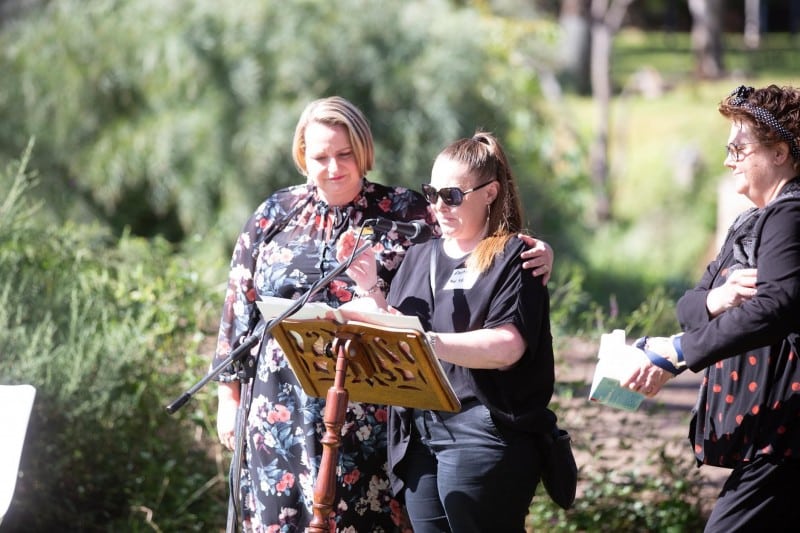
For two years Michelle and her husband Richard have given their time and energy to volunteer at the ‘Walk to Remember’ held in Glen Osmond, South Australia. She is the event’s MC, and Richard is a vital part of the barbecue crew. For Michelle, the most moving part of the walk is when she invites the families of babies and children who have died to come forward and ‘say their name’ and remember them.

As well as volunteering for Red Nose, Michelle also generously donates part of the proceeds from the sales of her book, The Present Box. This beautifully illustrated book was written with her niece and Brianna’s sister Ellie when she was six. It explains death, grief, loss and funerals to children aged 2-11.

“I have a strong ethos of paying it forward. My sister received a lot of support when Brianna died, and I haven’t forgotten. It makes me feel good to contribute.”

We have a range of volunteer opportunities at Red Nose. If you would like to help save little lives and support bereaved families, sigh up now.

Call our Grief and Loss 24/7 Support Line 1300 308 307

Call our Safe Sleep Line 1300 998 698

Keep up to date with our work

Name
Select the Newsletter you wish to Sign up to(Required)