




Whether you’re a GP, midwife, nurse, or allied health professional, your advice plays a vital role in promoting safe sleep and safer pregnancy practices for babies and families. We’ve compiled answers to the most frequently asked questions from healthcare professionals about safe sleep guidelines, reducing the risk of SIDS/SUDI, and creating safe sleep environments for infants.
Common questions about Safe Sleep
No. Baby nests, cocoons, and similar padded sleep surfaces are not safe for infant sleep. Although popular on social media, they do not meet Red Nose safe sleep recommendations, as they often have soft, padded sides and do not provide a flat, firm sleep surface.
Refer parents to the ACCC’s Product Safety website, which outlines safe and unsafe baby sleep products. Products that elevate or mould to a baby’s body can increase the risk of suffocation or Sudden Unexpected Death in Infancy (SUDI).
Swaddling should stop as soon as a baby shows signs of rolling — typically around 4–6 months, but sometimes earlier.
Red Nose recommends:
– Stop swaddling immediately once baby attempts to roll.
– Leave arms free once the startle reflex fades, usually around 3 months.
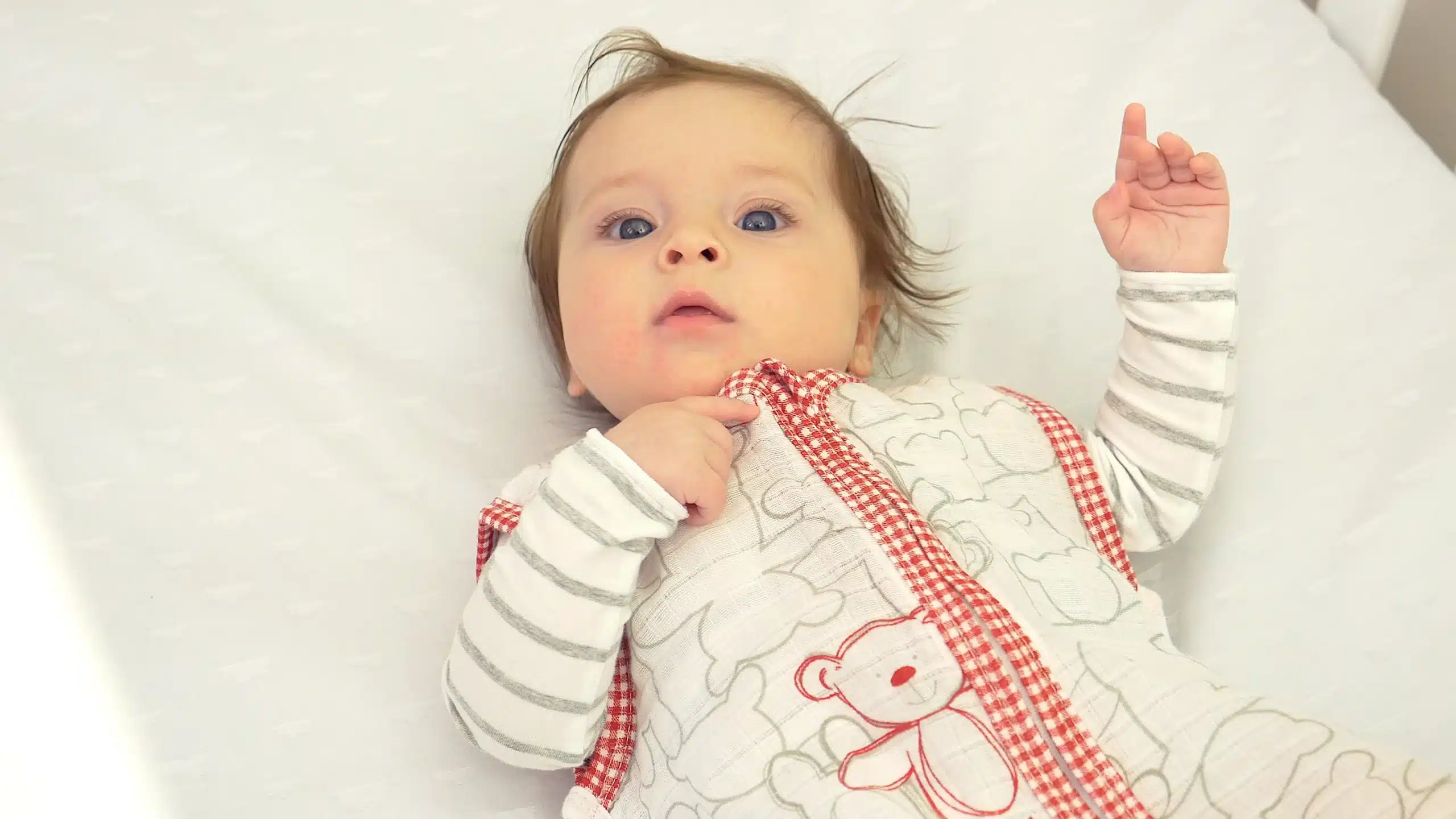
– Never wrap a baby when co-sleeping or when using a sleeping bag.
More on safe swaddling here.
There is no evidence that home baby monitors prevent SUDI (Sudden Unexpected Death in Infancy).
Red Nose does not recommend using baby monitors as part of safe sleep guidance, though they may provide peace of mind for some families, especially after a previous loss.
Monitors may cause false alarms and unnecessary anxiety. Always prioritise proven safe sleep practices such as placing baby on their back, in their own safe sleep space.
More on baby monitors.
Blankets can be used from birth if they are lightweight and securely tucked. Follow these guidelines:
Keep blankets below baby’s armpits and tuck firmly at the foot and sides of the cot.
– Place baby at the bottom of the cot to reduce risk of wriggling under the covers.
– Stop using blankets once baby is rolling or moving significantly during sleep.
– Weighted blankets are not safe for babies.
Read more:
Safe bedding
Sleep baby with head and face uncovered
Weighted blankets
No. Covering a pram with cloth, even light muslin, can create unsafe heat levels and restrict airflow, increasing the risk of overheating.
Refer parents to the following resources:
The dangers of covering your pram
CPR Kids: Pram temperature test
These resources include visual examples and temperature comparisons.
Placing a mattress on the floor can reduce fall risk, but it may increase the risk of mould and dampness, especially on carpet. There is currently no research linking mould to SUDI, but mould exposure is best avoided.
Red Nose supports room-sharing rather than bed-sharing, but recognises that co-sleeping does occur.
Refer families to this guidance:
Co-sleeping safely
Sharing a sleep surface with baby
Cot to bed safety brochure
While Red Nose does not currently offer brochures specifically on pram covering in translated formats, you can refer to:
The dangers of covering your pram
Parents unaware of risks
No. Devices marketed to improve head shape — including pillows and wedges — are not safe for infant sleep. These products restrict natural head movement and may interfere with baby’s ability to roll or move safely.
Refer to:
Baby’s head shape
What is plagiocephaly (flat head)
Most babies begin rolling by 4–6 months, which naturally improves head shape without intervention.
Most brochures and posters are available as free downloads:
Parent and health professional resources
First Nations resources
Print materials can be purchased at:
Red Nose shop
For dads:
SMS4Dads
SMS4DeadlyDads
Portacots can be safe if used according to the manufacturer’s instructions and Australian safety standards. However, they are generally less robust than standard cots and should be checked regularly for wear and tear.
A safe portable cot meets mandatory Australian Standards. For more information, visit the Australian Government’s Product Safety website regarding mandatory standards for infant sleep products.
Key safety tips:
– Use only the original mattress — no additional padding.
– Regularly inspect locking mechanisms.
– Follow weight limits (often under 15kg).
– Stop using the bassinet level once baby shows signs of rolling.
More info:
Red Nose on portable cots
Product Safety Australia folding cots
We have a range of online and printed resources available around Safe Sleep and better bereavement care.
Learn more
Find our downloadable resources here
Order printed resources here
If we have not answered your Safe Sleep question here please remember we are available business hours (AEST/AEDT) time on our Safe Sleep for Parents and Carers line on 1300 998 688.
Did you find this helpful?
Good job! Please give your positive feedback
How could we improve this post? Please Help us.
