The safest place for a baby is in their own safe sleep space. Red Nose does not recommend co-sleeping with your baby (sharing a sleep space). However, if you do co-sleep, it is important for you to know the safest way to do it.
What to know about co-sleeping with your baby
We understand that some parents choose to co-sleep, while others may find themselves co-sleeping unintentionally.
If you choose to co-sleep, it is important to know how to reduce the risks. There are some times when co-sleeping with your baby can be especially dangerous.
Tips for safer co-sleeping with your baby

If you co-sleep, these tips can help reduce the risks:
01
Place baby on their back
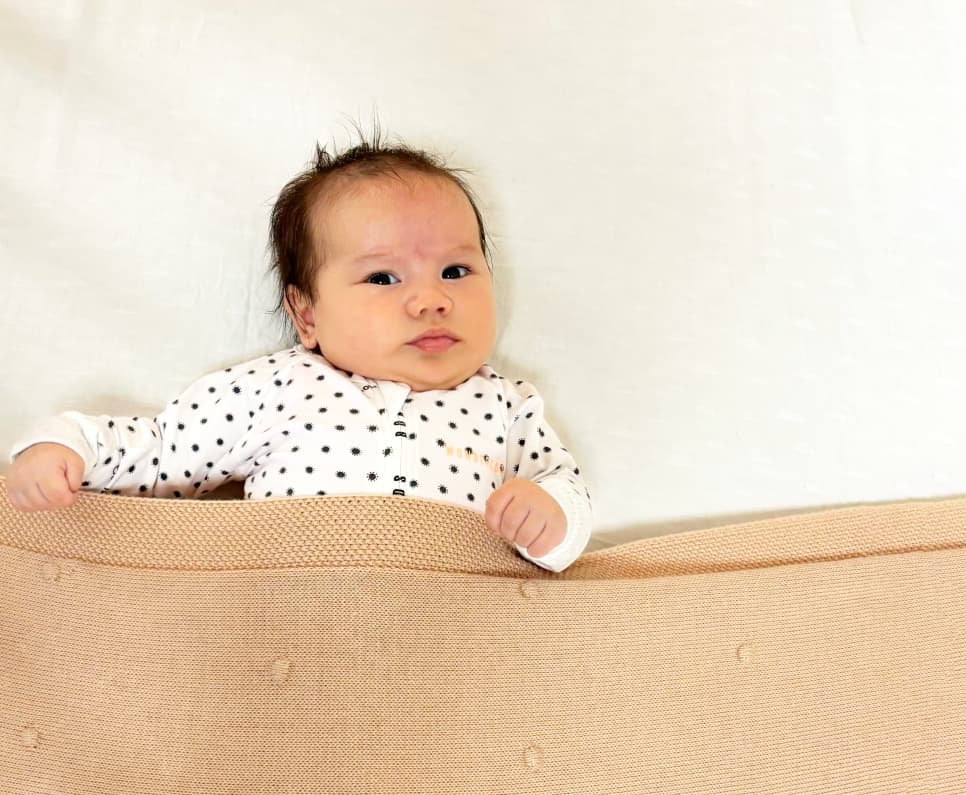
Place your baby on their back to sleep (never on their tummy or side). This helps to protect their airways.
02
Keep baby’s head and face uncovered
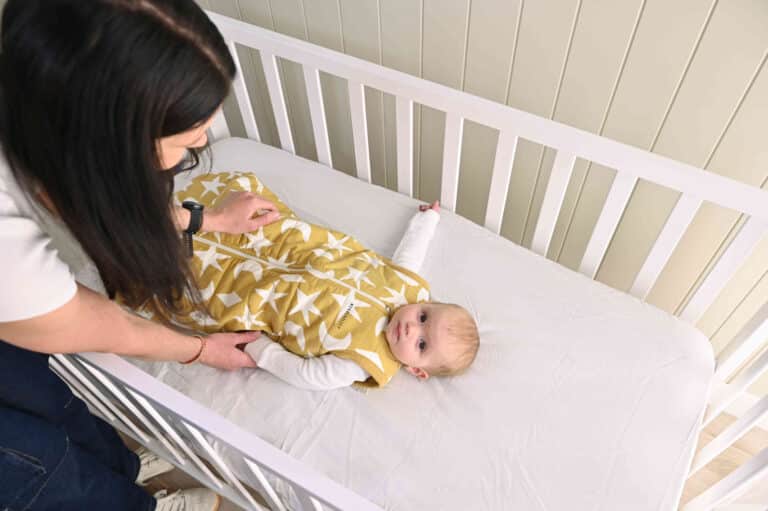
Keep pillows and adult bedding away from your baby. Use a safe sleeping bag with no hood and baby’s arms out – don’t wrap or swaddle baby when co-sleeping.
03
Use a firm, flat mattress
Don’t use a waterbed, or place anything soft underneath – for example, a lamb’s wool underlay or pillows. This can increase the risk of overheating and suffocation.
04
Remove strangling risks
Tie up long hair and remove anything else that could be a strangling risk, including all jewellery, teething necklaces and dummy chains.
05
Move the bed away from the wall
Move the bed away from the wall, so baby can’t get trapped between the bed and wall.
06
Make sure baby can’t fall out of bed
Consider putting your mattress on the floor if it’s possible, as your baby might roll off the bed.
07
Create a clear space for your baby
Place baby on their back to the side of one parent, away from the edge – never in the middle of two adults or next to other children or pets, as this can increase the risk of overheating and suffocation.
When not to co-sleep with your baby
You should never co-sleep or lie down holding baby if:
- You are overly tired or unwell.
- You or your partner have recently consumed alcohol.
- You or your partner smoke, even if you don’t smoke in the bedroom.
- You or your partner have taken any drugs that make you feel sleepy or less aware.
- Your baby was premature or small for their gestational age.
Never co-sleep with your baby on your chest

Falling asleep holding baby on a couch or chair is always unsafe – move yourself and baby to a safe sleep environment if you think you might fall asleep.
Follow our Six Safe Sleep Recommendations
The Red Nose Six Safe Sleep Recommendations are based on many years of research and are evidence-based to reduce your risk of sudden infant death and other sleep accidents.
If you co-sleep with your baby, it is important to consider this advice and to follow our tips for safer co-sleeping.
Every family is unique, and every baby is unique – so you need to make the decision that is right for you and your family. We’re here to support you on your parenting journey.
Co-sleeping with your baby: frequently asked questions
What is co-sleeping?
Co-sleeping is when a parent or caregiver, their partner, the baby’s siblings or any other person is asleep on the same sleep surface as the baby. Sometimes co-sleeping is planned, and sometimes it happens unintentionally.
What’s the difference between bed-sharing and co-sleeping?
Bed-sharing means bringing your baby onto a shared surface where co-sleeping is possible, whether co-sleeping is intended or not. Co-sleeping is when you, or anyone else, is asleep on the same sleep surface as your baby. Both are ways of sharing a sleep surface with your baby.
Is co-sleeping with your baby safe?
Red Nose does not recommend co-sleeping. The safest place for your baby to sleep is in their own safe sleep space, for all sleeps, night and day. Sharing a sleep surface with your baby can increase the risk of sudden unexpected death in infancy (SUDI), including sudden infant death syndrome (SIDS) and fatal sleep accidents. If you do co-sleep, follow our tips for safer co-sleeping above.
Read more: Is it safe to sleep with my baby?
Where should my baby sleep?
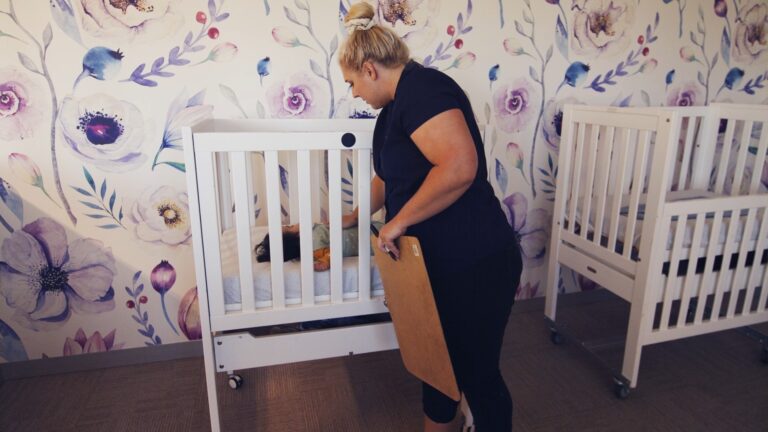
The safest place for your baby to sleep is in their own safe sleep space, in the same room as their parent or caregiver, for at least the first 6 months. See our Six Safe Sleep Recommendations.
When is co-sleeping with your baby especially risky?
Sharing a sleep surface with your baby is especially high-risk if:
• your baby is less than three months old, was born pre-term or was born small for gestational age
• the parents sharing the sleep surface smoke
• the parents sharing the sleep surface are under the influence of alcohol, sedating medications or illicit drugs, as these can impair their ability to respond to their baby
• a parent falls asleep with their baby on a sofa or couch.
Can I co-sleep if I smoke?
Is it safe to fall asleep with my baby on the couch?
No. Co-sleeping with your baby on a sofa or couch is extremely dangerous and is not recommended under any circumstances. Sofas and armchairs have soft cushions, gaps and sloped edges that can trap a baby’s face or body. If you feel yourself getting drowsy while holding your baby, place them in their own safe sleeping space before you fall asleep.
Read more: Co-sleeping with your baby on a sofa or couch. Is it safe?
Can I feed or cuddle my baby in bed?
There is no increased risk of sudden unexpected death in infancy while sharing a sleep surface with your baby during feeding, cuddling and playing, as long as your baby is returned to their cot or their own safe sleeping surface, on their back, before you go to sleep.
Can I wrap or swaddle my baby when co-sleeping?
No. When co-sleeping with your baby, don’t wrap or swaddle them. Use a safe sleeping bag with no hood and your baby’s arms out, and keep pillows and adult bedding away from your baby.
Where should my baby lie in the bed if we co-sleep?
If you are co-sleeping with your baby, place them on their back, to the side of one parent and away from the edge of the bed. Never place your baby in the middle of two adults or next to other children or pets, as this can increase the risk of overheating and suffocation.
Is the Safer Co-Sleeping Guide available in other languages?
Yes. Our co-sleeping brochure has been translated into a range of languages, including Vietnamese, Simplified Chinese, Traditional Chinese, Hindi, Punjabi, Spanish and Korean. Find co-sleeping advice in your language.
Who can I talk to about safe sleep and co-sleeping?
Call our Safe Sleep Advice Line on 1300 998 698, 9am to 5pm Monday to Friday (AEST), or email education@rednose.org.au.
Did you find this helpful?
Good job! Please give your positive feedback
How could we improve this post? Please Help us.