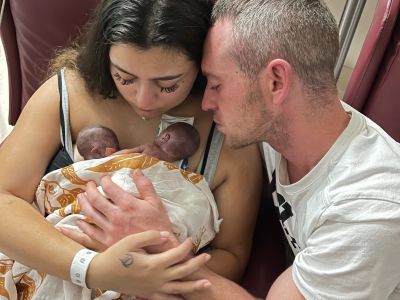




Red Nose supports anyone affected by the loss of a pregnancy, stillbirth, death of a baby or child.
There is a lot of different words to define your loss.
Perinatal Loss
A perinatal loss is the loss of a pregnancy or the death of a newborn within the first month of life. (Stillbirths and Neonatal Deaths in Australia, Definitions Used in Reporting).
It includes:
- Stillbirth: which is the death of a foetus before birth, after 20 weeks’ gestation or weighing at least 400 grams
- Neonatal death: which is the death of a live-born baby within 28 days of birth, after 20 weeks’ gestation or weighing at least 400 grams
- Termination for Medical Reasons (TFMR): which is the ending of a pregnancy for medical reasons for either the pregnant person or the baby
- IVF losses: failure to conceive after an in vitro fertilisation
Miscarriage
Is a broad term used to describe the loss of a pregnancy before 20 weeks’ gestation
Miscarriage or other early pregnancy losses
Miscarriage also has a range of medical terms used, including:
- Ectopic pregnancy: A potentially life-threatening condition that occurs when a fertilised egg implants outside of the uterus, most commonly in the fallopian tube.
- Missed Miscarriage: This is where a baby has died, but a physical miscarriage has not yet occurred.
- Chemical Pregnancy: is a very early pregnancy loss, which was only recorded on a pregnancy test.
- Molar pregnancy: A molar pregnancy occurs when there is a genetic error during fertilisation, leading to the growth of abnormal tissue in the uterus, which can sometimes be cancerous.
Death of a twin or multiple pregnancies
This is when one or more babies have died in pregnancy, where there is also a living child or multiple babies have died. There is also Vanishing Twin Syndrome, which is when a fetus in a multiple pregnancy dies within the first trimester and is reabsorbed.
SUDI (Sudden Unexpected Death in Infant)
A term used to refer to all cases of sudden and unexpected death in infancy and includes deaths from the sudden infant death syndrome (SIDS) and fatal sleeping accidents. Deaths are classified as SUDI if they occur between 7 and 365 days of life and fulfil the following criteria:
- Deaths that were unexpected and unexplained at autopsy
- Deaths during acute illness that were not recognised as life-threatening
- Deaths due to an acute illness of less than 24 hours duration in a previously healthy infant (or death after this if life had only been prolonged by intensive care)
- Deaths from a pre-existing or diagnosed condition, or deaths from any form of accident, trauma, or poisoning (CESDI SUDI studies 1993-1996)
Sudden Infant Death Syndrome (SIDS)
Defined as the sudden unexpected death of an infant <1 year of age, with onset of the fatal episode apparently occurring during sleep, that remains unexplained after a thorough investigation, including performance of a complete autopsy and review of the circumstances of death and the clinical history (Krous et al, 2004).
Sudden Unexplained Death in Childhood (SUDC)
The sudden and unexpected death of a child over the age of 12 months that remains unexplained after a thorough case investigation (Krous et al., 2005).
Termination for Medical Reasons (TFMR)
TFMR is the ending of a pregnancy for medical reasons, such as when a baby is diagnosed with a chromosomal, genetic, or structural condition, or when the pregnancy poses a risk to the mother’s health or life. The term compassionate induction may also be used as an alternative to TFMR, depending on a family’s personal preference and after consultation.
Involuntarily Childlessness
Involuntary childlessness is when a person or couple have been unable to fulfil their dream of having a child
Red Nose supports anyone affected by the loss of a pregnancy, stillbirth, the death of a baby or child. You can contact our 24/7 Grief and Loss Support Line on 1300 308 307 or visit our Grief & Loss Support hub here.

Did you find this helpful?
Good job! Please give your positive feedback
How could we improve this post? Please Help us.