



Why sudden changes in foetal movement, including increased movement can be a warning sign, and what every pregnant person needs to know to help prevent stillbirth.
Bianca’s Story in Loving Memory of Angelo
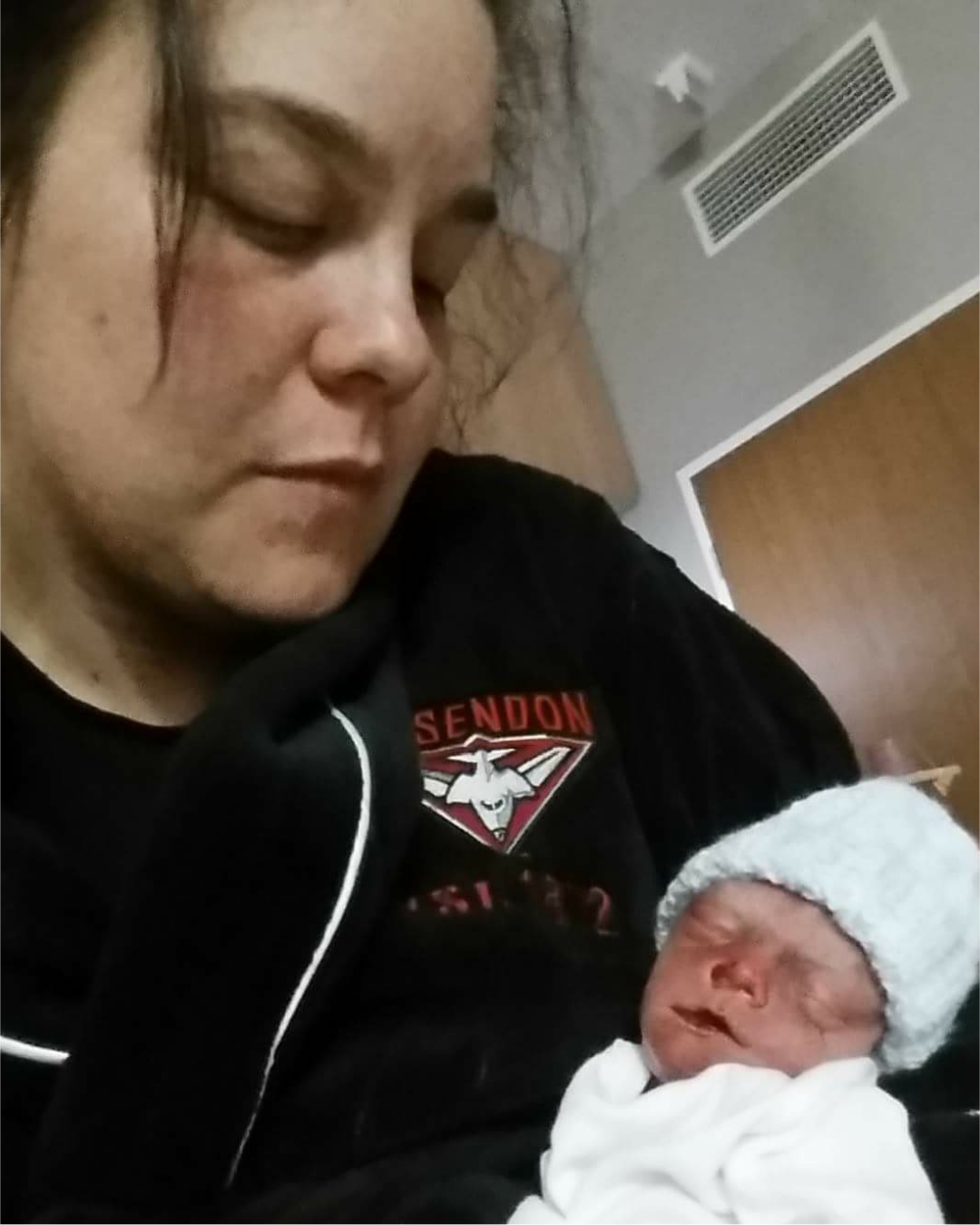
Increased baby movement is often seen as reassuring during pregnancy. However, any sudden change in your baby’s usual movement pattern including unusually strong or frantic movement can be a sign of feotal distress.
For bereaved parents Bianca and Michael, understanding this distinction came too late.
In 2016, they lost their son, Angelo to stillbirth.
“It felt like a footy match in my uterus.” There were changes in Angelo’s movements
Bianca recalls the night everything changed vividly.
Angelo’s movements had suddenly and noticeably increased. Bianca describes it as feeling like she was “hosting a footy match in my uterus”. Alongside the intense movement, she began to feel generally unwell.
As Angelo was her fifth baby, Bianca was not immediately alarmed.
Later that night, as she continued to feel unwell, Bianca and her daughter Amy tried to listen to Angelo’s heartbeat using a home doppler (home foetal dopplers are now banned in Australia). All they could hear was Bianca’s own heartbeat.
“I wasn’t too concerned. It was just a home machine, and I wasn’t a trained professional. I was fit, healthy, a non-smoker and had four beautiful children. Why wouldn’t there be a heartbeat? But I had a niggling feeling.”
Trusting instinct and seeking care to help prevent stillbirth
The following morning, seeking reassurance, Bianca dropped her children at school and went to the hospital for a check-up.
Even before the ultrasound began, she felt an intuitive knowing that something was wrong.
When the midwife placed the ultrasound probe on her stomach, Bianca recalls seeing what felt like a ‘still picture’.
“There was no little heartbeat flickering, no wriggling.”
Despite the significant movement the night before, which many people may wrongly find comforting, Angelo had passed away.
Saying hello and goodbye
Birthing their lifeless son and watching Michael cut the cord brought an overwhelming wave of grief, shock and disbelief.
“I had support in every corner of the room, but Michael was the only person I saw. As he held our son, I saw him break. When I held Angelo for the first time, I closed my eyes and prayed, ‘Please let them be wrong. Please just let him start crying.’ I couldn’t let Angelo out of my sight.”
Bianca and Michael spent 21 precious hours with Angelo.
They then faced the heartbreaking task of telling their seven children combined that their baby brother had been born but had died, and watching them meet and say goodbye to him far too soon.
It’s not just about fewer kicks
“We don’t know why we lost Angelo,” Bianca says. “But what I want people to understand is that it’s not just about less kicks. If your baby’s movement suddenly becomes much more active than usual, that can also be a sign that something isn’t right. It’s about changes in movement.”
While reduced feotal movement is more commonly discussed, concerns around increased feotal movement are not new.
What the research shows
Scientific research has long suggested a link between sudden, excessive feotal movement and feotal distress.
- As early as 1977, studies identified sudden excessive movement as a possible sign of acute feotal distress.
- The Auckland Stillbirth Study (2011) found that 20.8 per cent of women who experienced stillbirth reported a single episode of “more vigorous than normal” movement.
- A Swedish study later found that 10 per cent of women who experienced stillbirth reported sudden increased movement followed by reduced or absent movement.
Turning grief into advocacy
Drawing on her lived experience and conversations with health professionals, Bianca has become a passionate advocate for greater awareness of all changes in feotal movement, not only reduced movement.
She has also recently become a funeral celebrant, allowing her to provide compassionate support to other bereaved families.
Honouring Angelo’s legacy
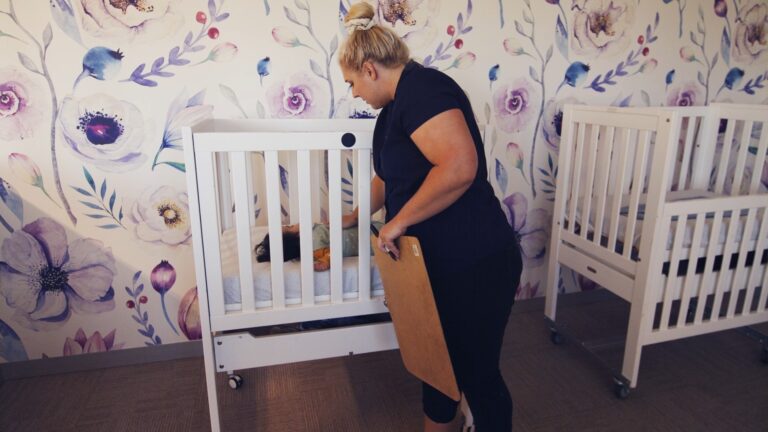
In Angelo’s memory, Bianca and Michael fundraised to donate a cuddle cot to the hospital where he was born.
Cuddle cots allow bereaved families to spend more uninterrupted time with their baby, without the urgency to say goodbye.
“There is nothing that would make losing Angelo better,” Bianca says. “But having more time with him would have meant everything. Donating a cuddle cot doesn’t fix the pain, but it helps.”
What parents need to know
Bianca says she will never stop advocating for greater understanding among families and health professionals.
Rather than focusing solely on ‘counting kicks’, pregnant people are encouraged to:
- Get to know their baby’s normal movement patterns
- Seek medical advice promptly if they notice any sudden or unusual change
- Trust their instincts and get checked, even if movements seem stronger than usual
If something feels different, it is always worth getting checked.
Did you find this helpful?
Good job! Please give your positive feedback
How could we improve this post? Please Help us.