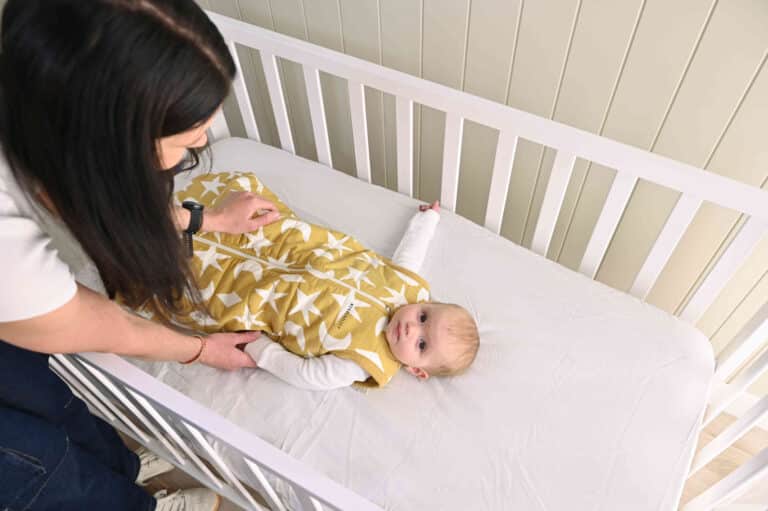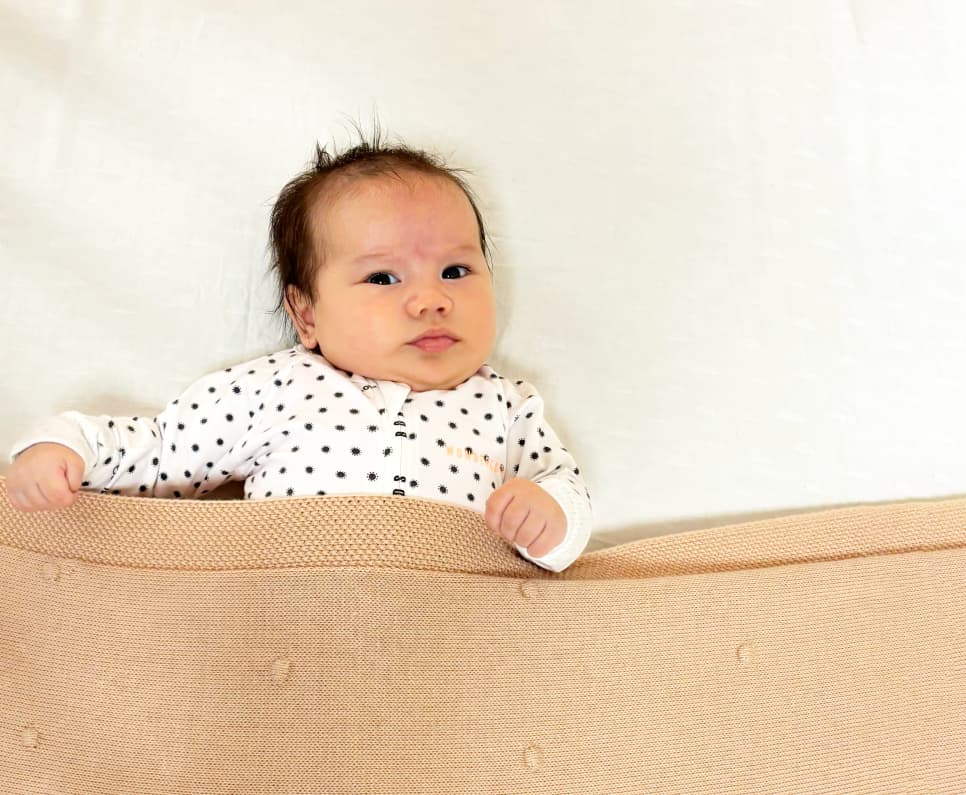


Going on a holiday or visiting family? Travelling with your baby can be exciting—but it also means making sure your little one stays safe, especially while sleeping in a new environment.
Red Nose knows it can be hard deciding what to pack to help keep your baby safe when sleeping away from home.
How to Create a Safe Sleep Space for Baby While Travelling
Preparation is key. Babies are more sensitive to temperature changes and unfamiliar environments, which can impact both safety and sleep quality. Here’s how to stay safe and prepared:
Pack for All Weather Conditions
- Bring a range of clothing options: short and long-sleeved bodysuits, singlets, socks
- Include sleeping bags with different TOG ratings and wraps or swaddles of varying thicknesses
- Dress your baby according to the temperature to help prevent overheating, a known risk factor for Sudden Infant Death Syndrome (SIDS)
Maintain a Consistent Sleep Routine
- Try to keep your baby’s sleep schedule as normal as possible
- Familiar sleep cues like routine bedtime rituals can help your baby settle, even in a new place
Comfort Objects and Safety
- If your baby is over seven months, they may feel comforted by a familiar soft toy or comforter
- Let them enjoy it while awake, but remove it from the sleep space at nap or bedtime to reduce suffocation risk
Safe Sleeping Guidelines While Away from Home
Even when travelling, the same safe sleep rules apply:
- Always use a separate, safe sleep space—never share a bed with your baby
- Take a portable cot (portacot) that meets Australian Standard.
- If using a loan cot, check for rips, tears, or missing parts, and make sure it complies with Australian standards—call ahead to confirm if needed.
A safe portable cot meets mandatory Australian Standards. For more information, visit the Australian Government’s Product Safety website regarding mandatory standards for infant sleep products.
Car Travel Safety Tips for Babies
- Use window shade cloths to block direct sunlight and keep the car cool
- Overheating in cars is common, especially on long trips—check baby regularly
- Take frequent breaks and offer fluids often to keep baby well hydrated
It is required by law that a baby is placed in a correctly fitted infant restraint that meets the Australian standard for every trip in the car.
For more information, visit the Australian Government’s Product Safety website car seat guide.
Did you find this helpful?
Good job! Please give your positive feedback
How could we improve this post? Please Help us.