


As more grandparents take on caring duties for their grandchildren, it’s important that all carers know our six safe sleep recommendations.
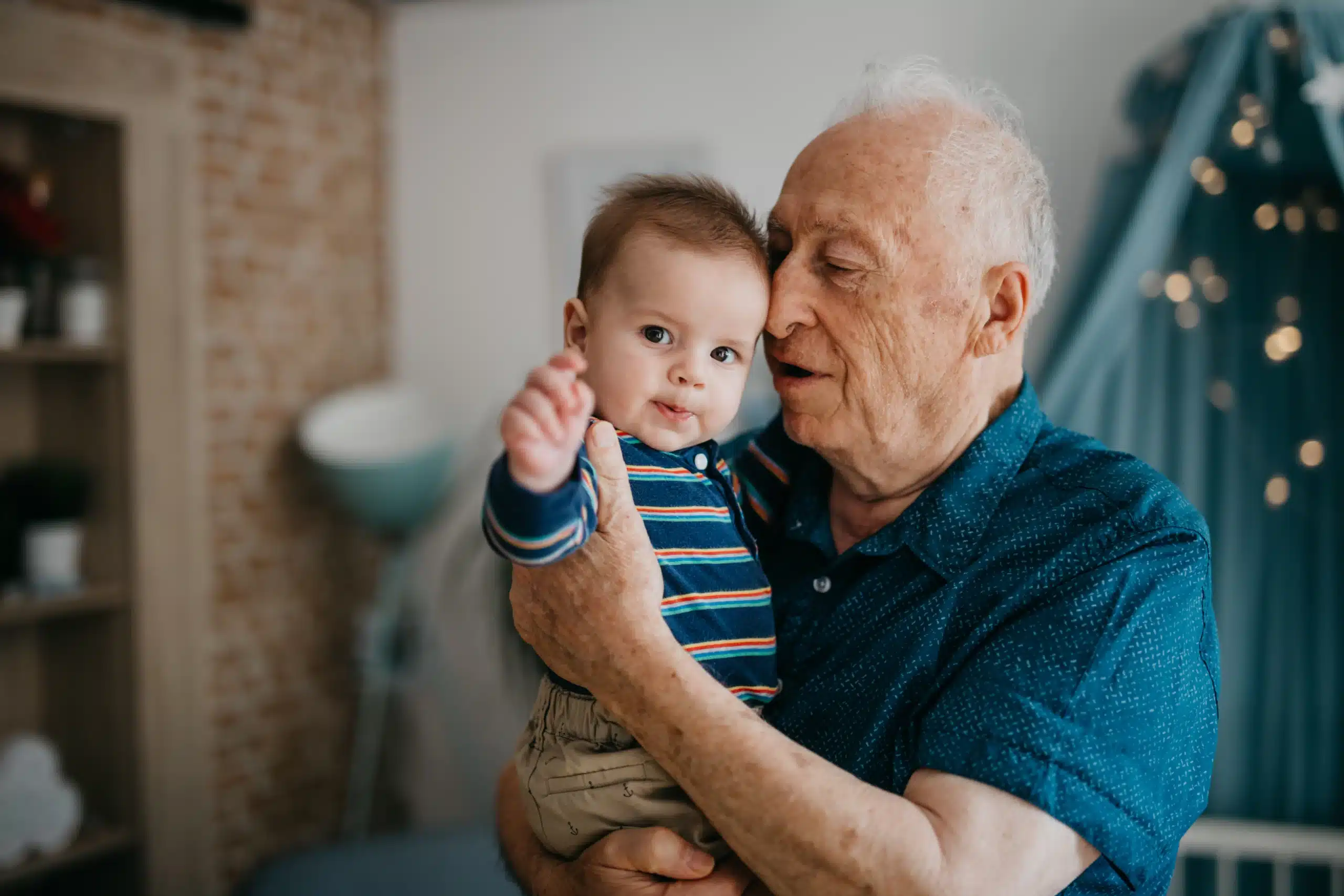
A lot has changed since the 80s & 90s – including safe sleeping advice. Many grandparents play an active role in caring for their grandchildren, and we want to make sure they have all of the tools they need to sleep their grandkids safely. It’s so important to put babies to sleep on their back from birth and follow all six safe sleep recommendations.
The six safe sleep recommendations
Red Nose recommends six key steps to reduce the risk of sudden infant death, for all babies from birth to 1 year. Our safe sleep recommendations are based on research and are shown to reduce the risk to baby while they are sleeping. Following them for every sleep will help keep baby safe.
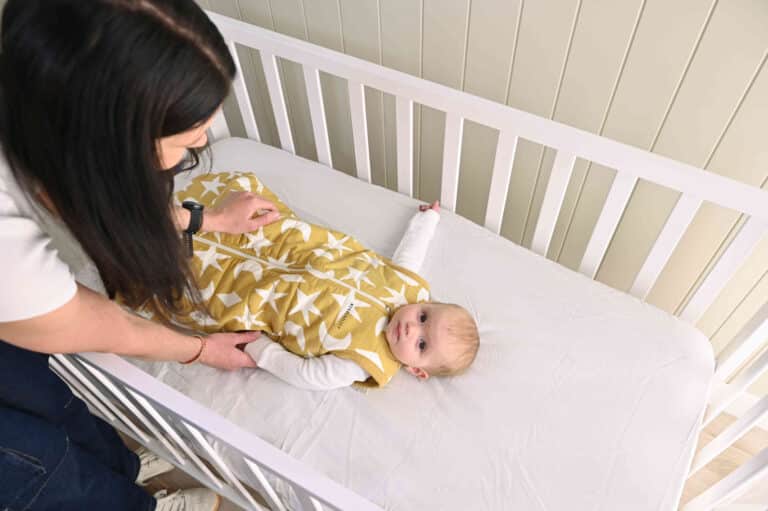
- Always place baby on their back to sleep. Placing baby on their back to sleep helps keep their airway clear and ensures their protective reflexes work. Back sleeping reduces the risk of suffocation, overheating, and choking.
- Keep baby’s head and face uncovered. Babies control their temperature through their face and head, so keeping baby’s face and head uncovered during sleep helps reduce the risk of overheating. It also helps keep their airways clear, which reduces the risk of suffocation.
- Keep baby smoke-free, before and after birth. Smoking during pregnancy and around baby once they are born increases the risk of sudden infant death – this includes second-hand smoke. If you smoke, don’t smoke around baby and never smoke where baby sleeps. For free help to quit smoking call Quitline on 13 78 48.
- Provide a safe sleeping environment, night and day. The safest place for baby to sleep is in their own safe space, with a safe mattress and safe bedding. Baby should always be placed on their back to sleep, with their feet at the bottom of the bassinet or cot.
- Sleep baby in their own safe sleep space in the same room as their parent or caregiver for at least the first 6 months. The safest place for baby to sleep is in their own safe space, in the same room as their parent or adult caregiver for at least the first 6 months.
- Breastfeed baby, if possible. Breastfeeding has been shown to reduce the risk of sudden infant death.
What makes a sleep space safe
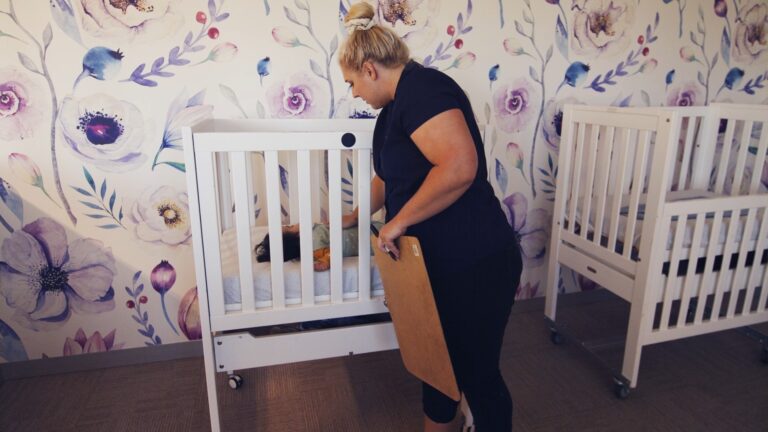
- A safe cot meets Australian standard. For more information, visit the Australian Government’s Product Safety website at www.productsafety.gov.au.
- A safe mattress is firm and flat, the right size for the cot, and meets the voluntary Australian standard. It should fit snugly, within 20 mm of the sides and ends, and must be flat rather than tilted or elevated.
- Safe bedding is lightweight, firmly tucked in and only pulled up to the chest.
- If you use a safe sleeping bag, it should fit well across the neck and chest, with the baby’s arms out and no hood.
- Nothing soft or bulky in the cot. Soft items in the sleep space are dangerous and increase the risk of suffocation and overheating. This includes doonas or loose blankets, pillows, cot bumpers, lambswool and soft toys like a teddy or comforter. Cot bumpers and soft bedding have been associated with fatal sleeping accidents.

View the Safe Sleeping Guide Now
Check out our handy Safe Sleeping Guide for how to safely sleep your little one.
Using an older or second-hand cot
All cots must meet the safety standard to be sold in Australia. If you are planning to use a second-hand cot, check that it meets the standard. Old or second-hand cots may be dangerous, and you should never use a cot that is not known to meet current safety standards.
For more information, visit the Australian Government’s Product Safety website at www.productsafety.gov.au.
What we say about co-sleeping
Red Nose does not recommend co-sleeping, as evidence shows it may lead to unsafe sleeping practices. However, some families choose to or find this happens accidentally. If that is the case, it is important to know how to reduce the risk.
Got a question about safe sleep?
We’re here to help. Call our Safe Sleep Advice Line on 1300 998 698 for free, expert support and evidence-based guidance. Whether you’re a parent, grandparent or carer, our Safe Sleep Educators can help you feel confident about your baby’s sleep safety. We’re here to answer your questions between 9am and 5pm Monday to Friday (AEST), or you can email us today.

Is English not your first language?
Find Safe Sleep & Safer Pregnancy advice in your language now
Did you find this helpful?
Good job! Please give your positive feedback
How could we improve this post? Please Help us.