When Do Babies Start Rolling Over?
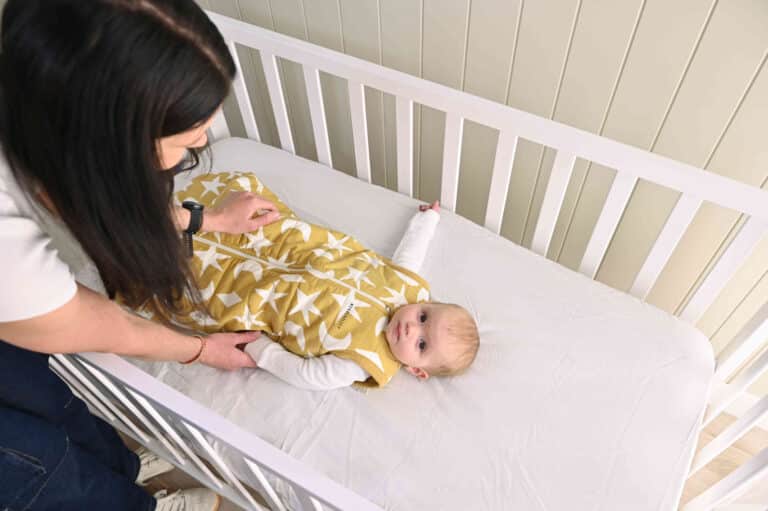
Always put babies to sleep on their back, day and night, in a sleeping bag or with tightly tucked-in sheets. One of the most common questions we receive from parents is what to do when they notice their baby rolling over in sleep.
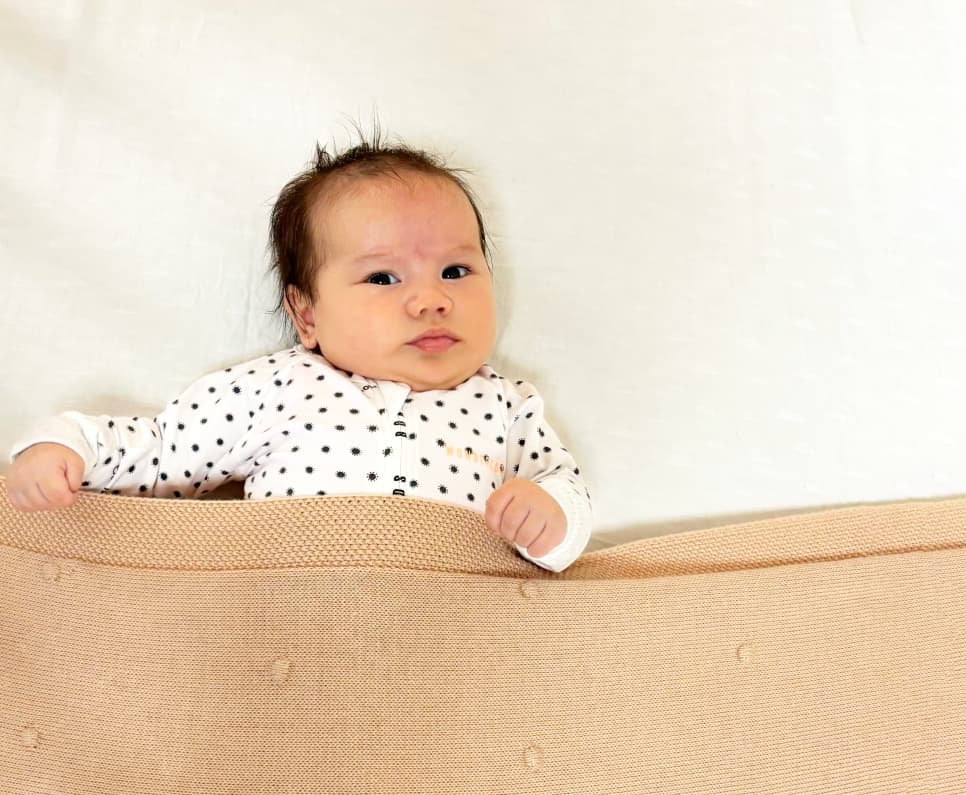
Most babies begin to show signs of being able to roll from about four months of age. Some babies begin rolling onto their tummy earlier than this, and some not until later. This is perfectly normal, as babies develop differently.
Baby Rolling Over in Sleep: 7 Steps to Follow
As soon as baby starts showing signs of rolling onto their tummy or side, follow these steps.
- Stop wrapping. It’s essential to stop wrapping as soon as baby starts showing signs that they can begin to roll, usually between 4–6 months. If you wrap baby, consider baby’s stage of development, and leave arms free once the startle reflex disappears around three months.
- Move baby from a bassinet to a cot. If you are using a bassinet, it is time to transfer baby into a safe cot as soon as they first show signs of being able to roll.
- Give baby extra tummy time. Supervised tummy time while baby is awake helps them develop stronger neck and upper body muscles, which enables them to roll back over. It’s best to start giving baby supervised tummy time from birth.
- Consider a safe sleeping bag. A safe baby sleeping bag may delay rolling.
- Tuck blankets in securely. If you use blankets, make sure baby’s feet are touching the bottom of the cot and that the blanket can only reach baby’s chest, so baby can’t wriggle under it.
- Use a firm, flat mattress. Make sure baby is on a firm and well-fitting mattress that is flat (never tilted or elevated).
- Keep baby’s face and head uncovered. Do not use lambswool, doonas, pillows, cot bumpers or soft toys.
What If Baby Can Only Roll One Way?
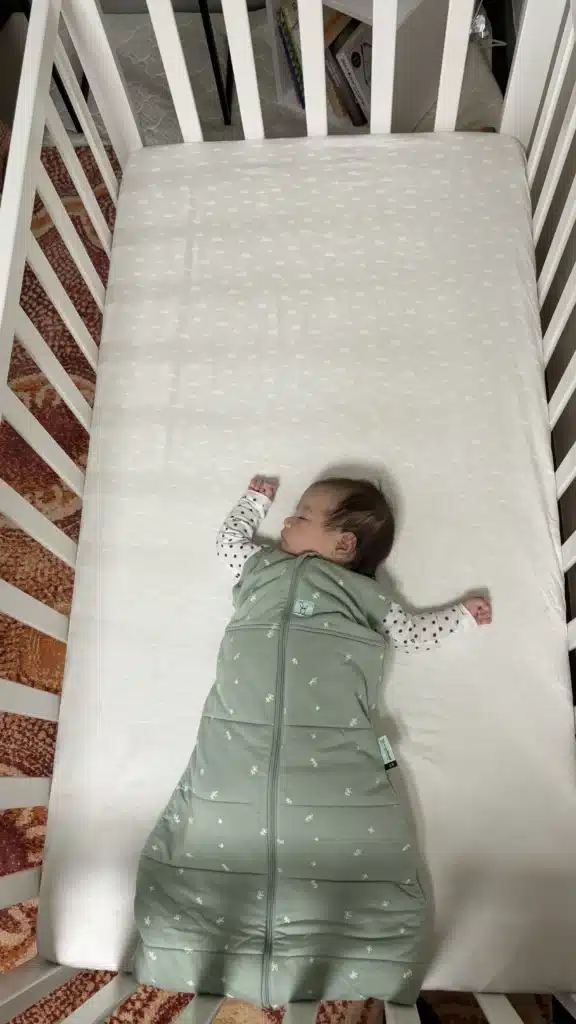
As babies grow and develop, they become very active and learn to roll around in the cot. It can be very nerve-racking once baby is starting to roll! What you do next depends on whether baby can roll in one direction or both.
If baby can roll in both directions
If baby can roll confidently in both directions unaided — from front to back and from back to front by themselves — continue to settle them on their back, but allow them to find their own natural sleeping position.
Once baby is able to roll in both directions, it is not necessary to wake during the night to turn baby over to the back position.
If baby can only roll in one direction
If baby can only roll unaided in one direction, gently roll them back onto their back whenever you see they have rolled onto their front or side.
Don’t Use Products to Stop Baby Rolling
Do not use any devices designed to keep baby in a particular sleep position. These can be dangerous, and they are not recommended.
You can also read Product Safety Australia’s information on sleep-related hazards in infant products.
Keep Following Our Safe Sleep Advice
Make sure you follow our safe sleep advice: put baby down to sleep on their back, make sure their face and head remain uncovered, and make sure the cot is safe, with a firm, flat mattress and no additional items in the cot, including pillows, loose sheets or blankets.
The Six Safe Sleep Recommendations
Always place baby on their back to sleep.
Placing baby on their back to sleep helps keep their airway clear and ensures their protective reflexes work. Back sleeping reduces the risk of suffocation, overheating, and choking.
Keep baby’s head and face uncovered.
Babies control their temperature through their face and head, so keeping baby’s face and head uncovered during sleep helps reduce the risk of overheating. It also helps keep their airways clear, which reduces the risk of suffocation.
Keep baby smoke-free, before and after birth.
Smoking during pregnancy and around baby once they are born increases the risk of sudden infant death – this includes second-hand smoke. If you or your partner smoke, don’t smoke around baby and never smoke where baby sleeps. For free help to quit smoking, call Quitline on 13 78 48.
Provide a safe sleeping environment, night and day.
The safest place for baby to sleep is in their own safe space, with a safe mattress and safe bedding. Baby should always be placed on their back to sleep, with their feet at the bottom of the bassinet or cot.
- Choose a safe cot, which meets mandatory Australian Standards. For more information, visit the Australian Government’s Product Safety website regarding mandatory standards for infant sleep products.
- Choose a safe mattress, which is firm, flat, the right size for your safe cot, and meets voluntary Australian Standards.
- Choose safe bedding, which is lightweight, firmly tucked in and only pulled up to the chest.
- If using one, choose a safe sleeping bag, which is well fitted across the neck and chest, with baby’s arms out, and no hood.
- No soft surfaces or bulky items. Don’t use any soft items in the cot. Soft items in the sleep space are dangerous and increase the risk of suffocation and overheating. This includes things like doonas or loose blankets, pillows, cot bumpers, lambswool, and soft toys like a teddy or comforter.
Sleep baby in their own safe sleep space, in the same room as their parent or adult caregiver, for at least the first 6 months.
The safest place for baby to sleep is in their own safe space, in the same room as their parent or adult caregiver, for at least the first 6 months.
Breastfeed baby, if possible.
Breastfeeding has been shown to reduce the risk of sudden infant death.
Frequently Asked Questions About Baby Rolling Over
When do babies start rolling over?
Most babies begin to show signs of being able to roll from about four months of age. Some babies begin rolling onto their tummy earlier than this, and some not until later. This is perfectly normal, as babies develop differently.
Should I stop wrapping my baby once they start rolling?
Yes. Stop wrapping as soon as baby starts showing signs that they can begin to roll, usually between 4–6 months. If you wrap baby, leave arms free once the startle reflex disappears around three months. When should we stop wrapping?
When should I move baby from a bassinet to a cot?
As soon as baby first shows signs of being able to roll, it is time to transfer them from a bassinet into a safe cot.
What should I do if I see my baby rolling over in sleep?
If baby can only roll unaided in one direction, gently roll them back onto their back whenever you see they have rolled onto their front or side. If baby can roll in both directions unaided, continue to settle them on their back, but allow them to find their own natural sleeping position.
Do I need to wake up during the night to roll my baby onto their back?
Once baby is able to roll in both directions, it is not necessary to wake during the night to turn baby over to the back position.
Can I use a product to stop my baby rolling?
No. Do not use any devices designed to keep baby in a particular sleep position. These can be dangerous, and they are not recommended. Should I use a product to stop baby rolling?
How does tummy time help when baby starts rolling?
Supervised tummy time while baby is awake helps them develop stronger neck and upper body muscles, which enables them to roll back over. It’s best to start giving baby supervised tummy time from birth.
Who can I talk to about my baby’s safe sleep?
Call our Safe Sleep Advice Line on 1300 998 698 between 9am and 5pm, Monday to Friday (AEST).


We’re here to help.
Call our Safe Sleep Advice Line on 1300 998 698 for free, expert support and evidence-based guidance. Whether you’re a parent, grandparent or carer, our Safe Sleep Educators can help you feel confident about your baby’s sleep safety.
Available during business hours.
Call 1300 998 698 Explore our Safe Sleep and Safer Pregnancy hubDid you find this helpful?
Good job! Please give your positive feedback
How could we improve this post? Please Help us.